NREGA: legal right to work for rural adult laborers
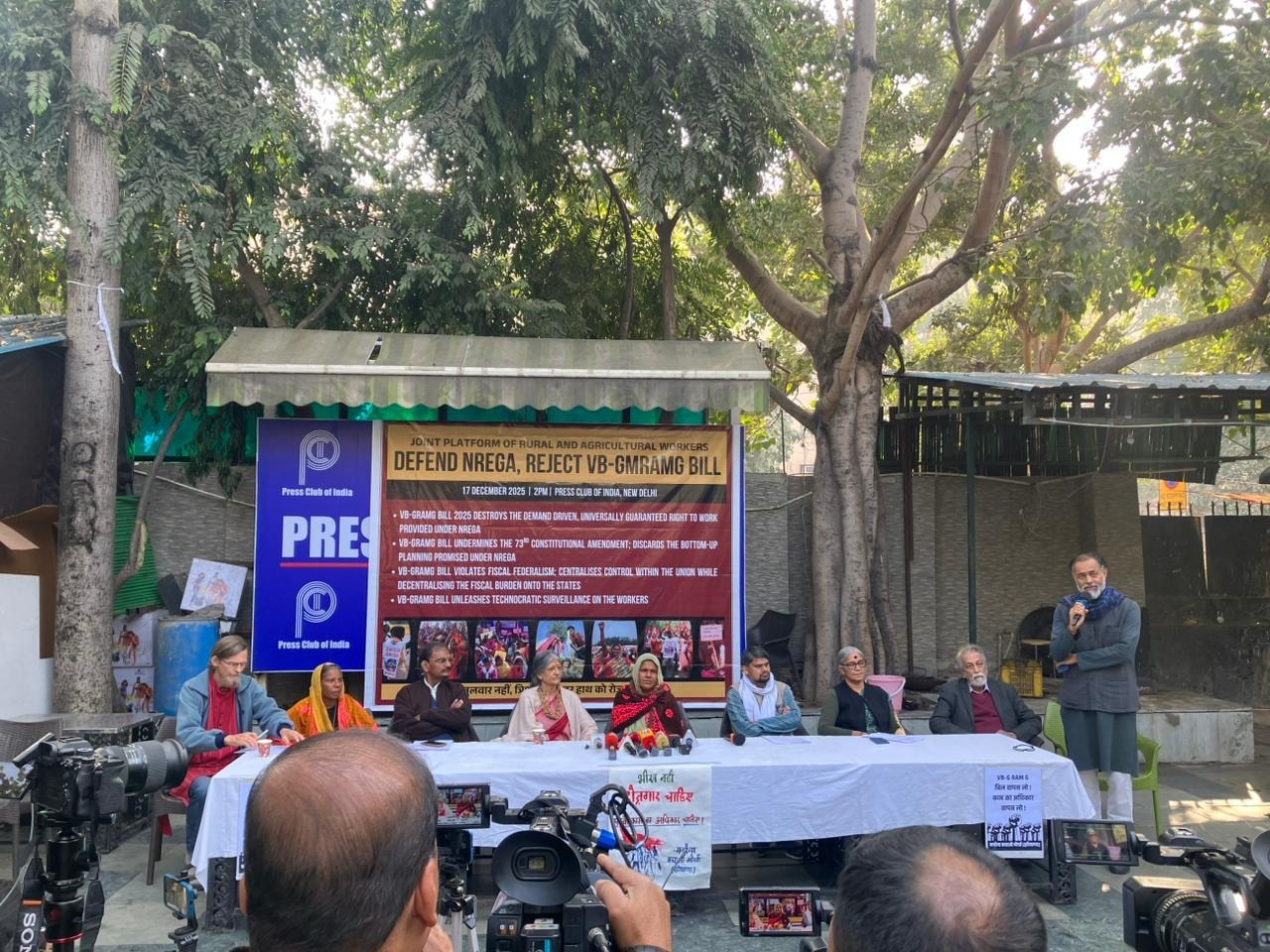
Financial Burden on States and Central Control (Section 5(1)): Under Section 5(1) of the bill, the central government will determine a ‘normative allocation’ (fixed budget). If the demand for work in a state exceeds this allocation, the entire additional cost will have to be borne by the state government. This will discourage states from providing more employment. Furthermore, the central government will have control over how states utilize their funds, which is contrary to the federal structure.
From Legal Right to Government ‘Scheme’: Under NREGA, obtaining work was a legal right, where the government was obligated to provide work to any rural adult laborer. The new bill is transforming this into a discretionary scheme, where the government will decide when and where work will be provided.
Return of Feudalism and Attack on Rural Wages: The fact is that NREGA did not negatively impact agricultural work; instead, small farmers and artisans also supported the laborers in their struggle. The 60-day ‘blackout period’ will eliminate the bargaining power of landless laborers, tribals, Dalits, and women. NREGA protected not just employment, but the ‘right to live with dignity,’ which is now being taken away. This new bill will recreate ‘bonded labor’ and a ‘feudal system’ in India and undo the positive impact NREGA had on increasing rural wage rates.
Attack on Gram Sabha and Local Governance: The new bill completely centralizes the planning process. Village works will no longer be decided by the ‘Gram Sabha’ (village council), but will follow a “top-down” approach determined from Delhi. This is against the 73rd Constitutional Amendment and the spirit of local self-governance.
Technological Complexity and Exclusion of Millions of Workers: Despite protests from rural laborers across the country, reports from the Standing Committee, and research organizations, the government is imposing technologies like biometric and Aadhaar-based payments. This could exclude over 130 million workers from the system. Instead of strengthening social audits to prevent corruption, the government is creating technical obstacles.
Abolishing a landmark law without consultation: NREGA was the result of a long struggle by workers from all sections of society. The government did not consult with labor organizations before amending or abolishing this historic law. The government wants the debate to be limited to just the “name” (G RAM G Bill), while secretly changing the very essence of the law.