Modi’s Dream Flight Stymied Most by Manjhi and His Acolytes
Modi’s Dream Flight Stymied Most by Manjhi and His Acolytes
A Stinging Rebuke from the Supreme Court over the MSME Ministry’s Failures, The SC had to deliver a reprimand
Ritesh Sinha
Senior Journalist and Political Analyst
Prime Minister Narendra Modi has consistently described micro, small and medium enterprises (MSMEs) as the backbone of India’s economy. The success of almost every major initiative—Aatmanirbhar Bharat, Make in India, Startup India, Vocal for Local and the vision of a Developed India‑2047 has been presented as contingent upon the health of the MSME sector.
According to official estimates, over 60 million MSME units operate in the country, providing direct and indirect employment to crores of people. If the legal framework intended to protect these enterprises is itself fragile, all governmental proclamations risk remaining mere rhetoric.
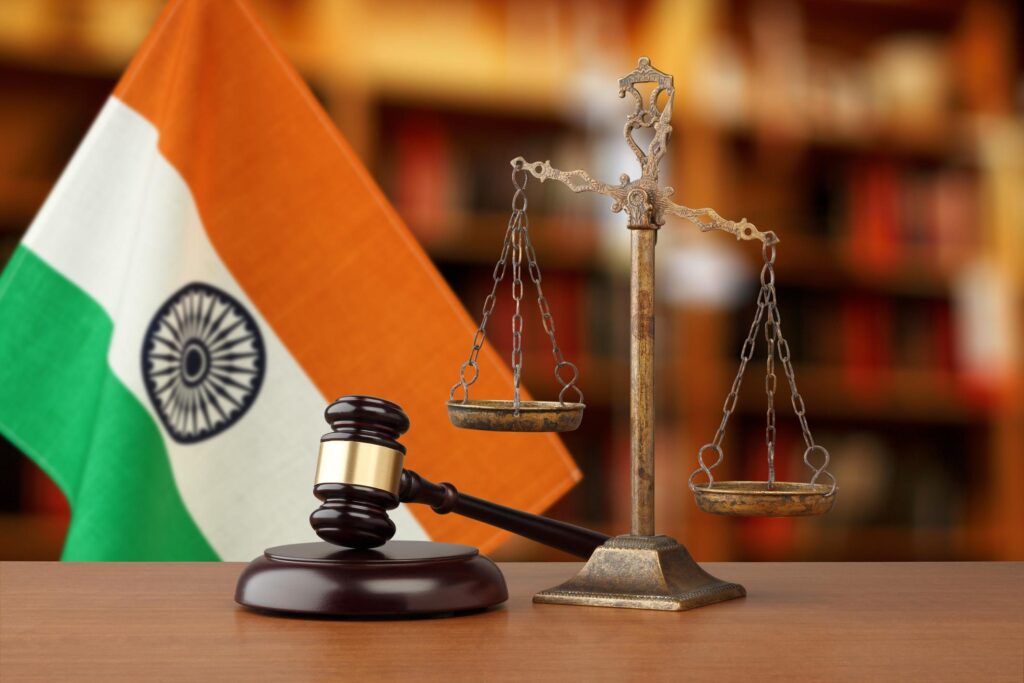
A recent observation by the Supreme Court has cast grave doubt on the functioning of the entire MSME Ministry. In a matter connected to Tata Steel, a Bench comprising Justice Manoj Mishra and Justice Manmohan upheld the IBC’s “clean slate” principle yet made it plain that the existing law does not do justice to MSMEs and other small operational creditors. The Court even advised the Law Commission and Parliament to recommend amendments.
That the country’s highest court should declare MSMEs to be “the most disadvantaged” under the present regime is a remark of the highest seriousness. The Court recognised that small creditors occupy the lowest rung in the priority of payments. Consequently, when large firms undergo insolvency, it is the small entrepreneurs—those with the least financial resilience who bear the brunt of the loss.
The question must be posed to the Union Minister for MSMEs, Jitan Ram Manjhi. If the Supreme Court itself has to state that legislative change is necessary to protect the interests of MSMEs, what was the Ministry doing until now? Was this problem invisible to the Ministry for years?
Did the voices of small enterprises never reach it, or were they not deemed worthy of serious attention?
Responsibility does not rest with the Minister alone. The Ministry’s Secretary, Additional Secretary, Joint Secretary, Development Commissioners and senior policy officials are equally accountable. Their duty is not merely to convene review meetings or unveil new schemes. Their paramount obligation is to ensure that legal lacunae which harm small enterprises are identified in time and that concrete reform proposals are placed before the government.
The IBC has been in force since 2016. Over nearly a decade thousands of companies have traversed the insolvency process and matters amounting to lakhs of crores of rupees have been settled. Industry bodies and experts repeatedly flagged the problems faced by small operational creditors. Yet no major legislative reform has emerged from the MSME Ministry. This inertia amounts not only to administrative weakness but also to a failure of policy‑making.
The Supreme Court made it plain that small enterprises cannot withstand even modest financial shocks. If a large corporate’s liabilities to them are frozen, and that corporate subsequently enters insolvency, the immediate loss is borne by the MSMEs. Many small enterprises are forced to shut down permanently after such shocks.
Prime Minister Modi speaks from every platform of MSMEs being the principal source of employment, yet the Ministry appears to have failed to fortify the legal protections these enterprises most urgently require. Increasing the number of schemes is less important than safeguarding the earnings of small businesses. If payments remain insecure, no scheme can save them.
READ MORE :
SIMS Annual Day Fest 2026 Celebrated with Grandeur at Sri Ram Centre, New Delhi
Three-Day Theatre Festival at Triveni Kala Sangam Enthralls Audience with Powerful Performances
The Ministry frequently issues long lists of achievements—registrations, loan disbursals, digital portals, training programmes and a host of statistical claims. But the Supreme Court’s observation indicates a deeper, structural problem. If the law does not afford adequate protection to small enterprises, administrative accomplishments ring hollow.
India’s millions of small entrepreneurs are not asking for special favours. They merely seek security for their legitimate dues, a legal framework that treats them fairly, and protection from being entirely sidelined in insolvency proceedings. This is the bare minimum a responsive government should guarantee.
The crucial question now is whether the Union MSME Ministry will treat the Supreme Court’s observation with the seriousness it deserves. Will the Ministry collaborate with the Ministries of Law and Finance to draft amendments to the IBC? Or will this important judicial admonition languish in some file, gathering dust like so many others?
If Prime Minister Narendra Modi genuinely regards MSMEs as the foundation of a developed India, the time for speeches has passed; the time for rigorous administrative accountability has arrived. Senior officials of the Ministry must be asked what they have done over the years to remedy this serious flaw. If their answer is unsatisfactory, it will be hard to avoid the conclusion that it is not the Opposition but the Ministry’s indifference and sluggish functioning that have dealt the greatest blow to the Prime Minister’s vision of MSME empowerment.
The Supreme Court has discharged its constitutional duty by identifying the problem and pointing to a path for remedy. The ball now lies in the court of the central government, the MSME Ministry and its senior officials. If reform does not follow, the price will be paid by the country’s millions of small entrepreneurs, hundreds of thousands of industries and the crores of jobs they sustain.