The Rise of Indian Culture on the Global Stage Through the Diplomacy of Gifts
Independent Journalist & Columnist
India is not merely a nation; it is a living stream of thousands of years of culture, civilization, philosophy, and human values. In India, politics has never been limited to governance alone; it has always remained deeply connected with society, culture, and the spirit of global brotherhood. Indian tradition has consistently conveyed to the world that relationships are sustained not by power, but by sensitivity and emotional warmth. In our culture, welcoming a guest is not a mere formality but a symbol of affection and respect.
At a time when global politics is rapidly transforming and the world is passing through phases of economic competition, wars, strategic tensions, and ideological conflicts, India is emerging on the world stage as a balanced and humane power carrying the spirit of “Vasudhaiva Kutumbakam” the world is one family.
Prime Minister Narendra Modi’s recent visit to five nations the United Arab Emirates, the Netherlands, Sweden, Norway, and Italy reflected this changing image of India. His tour was not confined merely to political meetings, trade agreements, or strategic partnerships; it also became a medium to spread the fragrance of Indian culture, folk traditions, art, agriculture, and civilizational values across the world.
The gifts presented by Prime Minister Modi to foreign leaders during the visit were not mere souvenirs; they were living symbols of India’s soul, diversity, and cultural consciousness. The history of Indian diplomacy has always remained intertwined with cultural values. In ancient times, when Indian traders sailed toward Southeast Asia, Arabia, and Europe, they carried not only goods but also Indian culture, philosophy, language, music, yoga, and lifestyle. This is why even today, the cultural traditions of Indonesia, Thailand, Cambodia, Vietnam, and several other nations reflect the imprint of Indian civilization.
Prime Minister Modi has given new direction to this cultural diplomacy. He understands that the world is not influenced only by economic power; cultural identity and emotional connectivity also build lasting international relationships. This is why Indian heritage, traditions, and cultural symbols occupy a special place in his foreign visits.
The gifts presented during this five-nation tour attracted considerable global attention. These gifts carried the fragrance of India’s sacred soil, the hard work of farmers, the artistry of weavers, the imagination of folk artists, and the warmth of Indian society.
To the President of the United Arab Emirates, Prime Minister Modi presented Gujarat’s famous Kesar mangoes and Meghalaya’s pineapples. In Indian tradition, fruits are not merely items of taste or consumption; they symbolize prosperity, love, and goodwill. Mangoes, regarded as the king of fruits, occupy a special place in Indian literature and folk culture. From Sanskrit literature to Hindi poetry, the mango has symbolized seasons, love, and sweetness. In Indian villages, the mango tree is not merely a fruit-bearing tree but an integral part of social and family life.
Similarly, the pineapple from Meghalaya symbolizes the natural richness and biodiversity of Northeast India. For a long time, Northeast India remained less visible in the national discourse, but Prime Minister Modi has accorded it special importance in both foreign policy and development initiatives. Its presence in diplomatic gifts reflects the message that India’s true strength lies in its diversity.
The Queen of the Netherlands was gifted handcrafted items adorned with Indian folk art. Indian folk arts are not merely a world of colors and patterns; they are expressions of social memories, traditions, and cultural consciousness. Folk traditions such as Madhubani, Kalamkari, Pattachitra, Warli, and Mithila art reflect the soul of Indian society. They portray village life, harmony with nature, feminine sensitivity, and the simplicity of folk culture. When such art reaches world leaders, it becomes not merely decorative but a mirror of India’s cultural identity. This is an effective example of India’s soft power.
The Prime Minister of Sweden was presented with Loktak tea from Manipur. This tea symbolizes not merely a beverage but the nature, labor, and cultural life of Northeast India. Loktak Lake is considered the identity of Manipur, and the culture surrounding it represents India’s biodiversity and traditional lifestyle.
One of the greatest strengths of Indian diplomacy has been its emphasis on emotional connectivity. While the politics of many nations appears centered only on interests, India has always placed humanity at the center of its global vision. This is why ideas such as global brotherhood and shared development remain integral to India’s foreign policy.
READ MORE :
SIMS Annual Day Fest 2026 Celebrated with Grandeur at Sri Ram Centre, New Delhi
Three-Day Theatre Festival at Triveni Kala Sangam Enthralls Audience with Powerful Performances
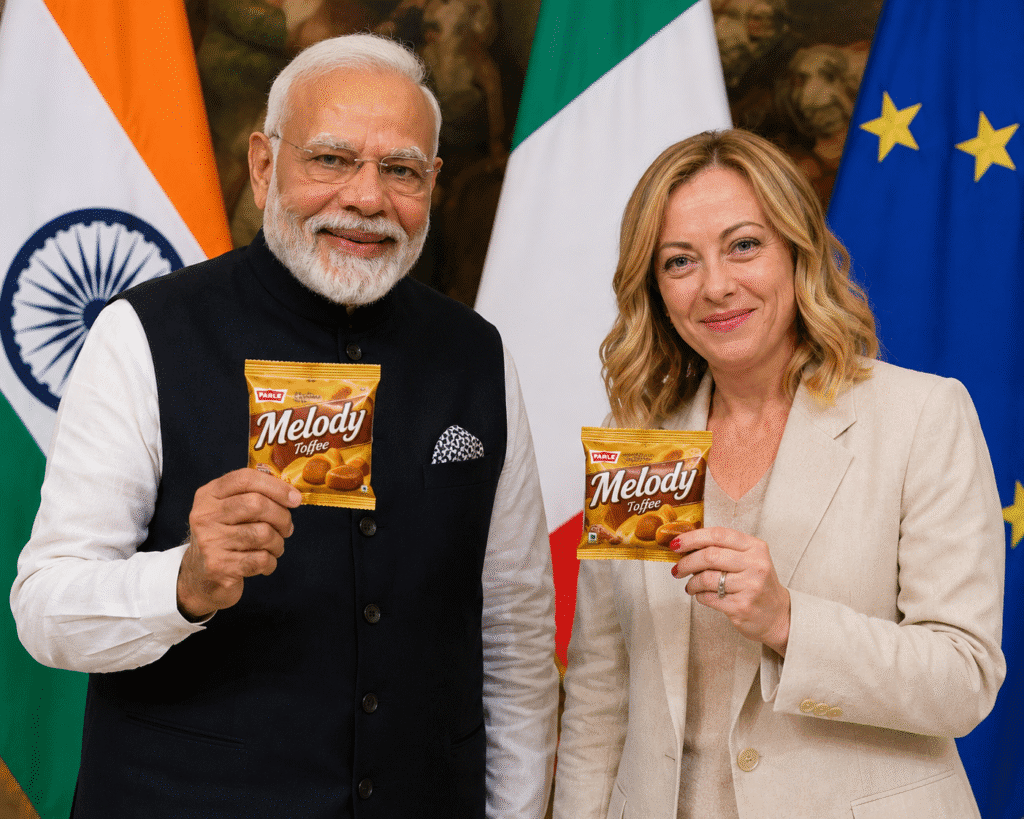
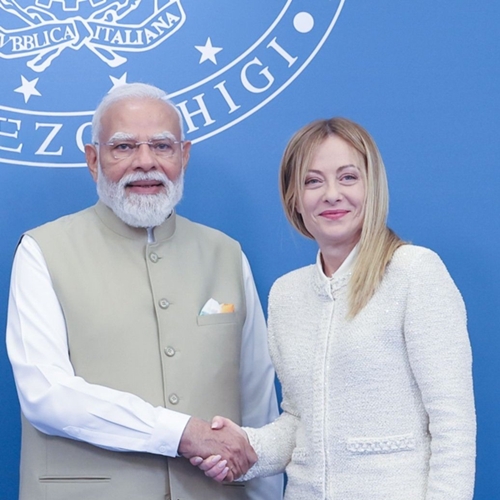
Italian Prime Minister Giorgia Meloni was gifted Assam’s famous Muga silk stole. Muga silk is an extraordinary example of the artistry and tradition of Indian weavers. Its golden sheen reflects not merely beauty but the dignity of Indian labor and rural life. Along with this, Prime Minister Modi’s gesture of gifting the popular “Melody” toffee highlighted the humane and warm aspect of diplomacy, transforming formal relationships into bonds of familiarity and affection. Politics and diplomacy often appear serious and formal, but Indian culture also values humor, affection, and emotional warmth. This small gesture became widely discussed across global media and social media platforms.
Another distinctive feature of Prime Minister Modi’s foreign visits is the way they showcase India’s regional diversity on the global stage. Sometimes it is the culture of Kashi, sometimes Tamil civilization, sometimes the traditions of Northeast India, and at other times the folk arts of Rajasthan or Gujarat. This conveys the message that India is not merely a nation of metropolitan cities but also a living civilization of villages, folk traditions, farmers, weavers, and artisans.
Over the past few years, this cultural confidence in India’s foreign policy has become stronger. Earlier, India often appeared on global platforms mainly as a developing nation grappling with challenges. Today, however, India stands confidently with its civilizational identity. The message of “One Earth, One Family, One Future” during the G-20 Summit was a modern expression of this Indian philosophy.
The essence of Indian culture lies not in conflict but in coexistence. Nature has been revered here; rivers are worshipped as mothers, trees are seen as the basis of life, and the entire world is viewed as one family. Therefore, when India engages with the world, its approach is not driven solely by strategic or economic considerations but also by human values.
During this tour, numerous important agreements related to trade, defense, green energy, technology cooperation, and investment were signed. India’s economic relations with European nations grew stronger, while new possibilities emerged in the fields of energy security and investment with Gulf countries. Amid all these developments, the presence of Indian culture remained visible throughout.
The real strength of any nation does not lie merely in military capability or economic growth but also in its cultural identity and civilizational confidence. Japan is known not only for technology but also for its culture. China combines civilization with production strength. Europe proudly projects its heritage globally. India, too, is now using its cultural power as a foundation for international relations.
The gifts presented by India conveyed a clear message: India wishes to move forward with both modernity and tradition together. On one hand, India is advancing in digital technology, space, defense, and economic growth; on the other, it remains deeply connected to its cultural roots. This balance distinguishes India from many other nations.
Prime Minister Narendra Modi’s tour also signals that in the future, India’s foreign policy will not remain confined merely to political or economic dimensions. Culture, civilization, heritage, and folk life will increasingly become its major strengths. Indian handicrafts, textiles, agricultural products, traditional cuisine, and folk arts are emerging as India’s new global identity.
This is not merely cultural presentation; it is also a means of giving global recognition to India’s rural economy and local artisans. When a foreign leader receives a handcrafted Indian textile, folk artwork, or agricultural product, the efforts of millions of farmers, weavers, and artisans also reach the world. This reflects the vision of “Local to Global” that India is advancing today.
The world today is witnessing rapid technological advancement, but human sensitivities often appear to be weakening. In such times, India, through its cultural consciousness, is conveying a message of balance to humanity. Indian philosophy has always emphasized that development should not remain limited to economic prosperity alone; it must also include humanity, ethics, and cultural values.
Prime Minister Modi’s five-nation visit was, in essence, an extension of this Indian worldview. Through Indian gifts, the world experienced that India is not merely an emerging economic power but also a civilization that places warmth, respect, and sensitivity above all in relationships.
When Gujarat’s Kesar mangoes reach Arab soil, Assam’s Muga silk appears on Italian diplomatic platforms, Loktak tea reaches European tables, and Indian folk arts are presented to world leaders, India truly reaches the hearts of the world through its culture.
Undoubtedly, Prime Minister Modi’s visit marks a new chapter in India’s foreign policy one in which diplomacy is written not only through agreements and documents, but also through culture, sensitivity, civilization, and the spirit of “Vasudhaiva Kutumbakam.” This is India’s identity, this is its strength, and this is the future of its global role.