A Decade of Educational Crossroads in Bihar
By Md. Irshad Ahmad, Advocate, Supreme Court of India, and Former President, AMU Old Boys’ Association, Delhi.
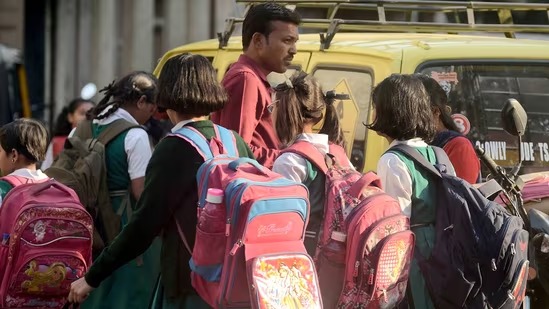
Over the last ten years the state of Bihar has witnessed a steady rise in the number of school-leavers and their examination success, yet the sharp mismatch between achievement and higher-education opportunity threatens to undermine this progress. In the Class X examinations conducted by the Bihar School Examination Board (BSEB), approximately 16-17 lakh students appeared annually in recent years, and among them roughly 13-14 lakh passed, yielding pass-rates in the early 80 % range. For instance, in the 2024 matric exam about 16,64,252 students appeared and 13,79,542 passed; the pass-rate stood at 82.91 %. At the same time earlier years such as 2023 saw 16,10,657 appear and 13,05,203 pass, still over 80 %. This indicates real improvement in base-school education in Bihar. Girls, in particular, have closed the gap: in the 2021 Class X exam 676,518 boys passed and 616,536 girls passed a ratio of about 52:48 signalling near parity. In the Class XII (intermediate) examinations the story is similar: roughly 13-14 lakh students have appeared in recent years and the pass numbers and pass-rates have edged upward into the mid-80 % zone.
At the same time many students from Bihar attend national boards such as CBSE and ICSE, though precise state-wise numbers remain elusive. For example, in the 2025 CBSE Class X exam the Patna zone (which covers Bihar and Jharkhand) recorded a pass-rate of 92.24 %. Such performance indicates that students from Bihar are not only appearing in large numbers but performing well in multiple systems of schooling. The good news is that foundational schooling is becoming less of a barrier; the challenge lies in what comes after Class X or Class XII.
When we look at the higher-education landscape of Bihar, the picture diverges. According to state data, there are approximately 1,072 colleges (both government and private) functioning in 2021 in Bihar, up from roughly 1,032 the previous year. In private colleges alone the number stood at about 532 in 2021. There are about 44 higher-education institutions at university level in the sense of State, Central and private universities (for example 20 state universities, 7 private universities, 4 central universities) plus institutes of national importance. Yet when one calculates the intake capacity across disciplines such as B.A., B.Sc., B.Com., BBA, B.Tech, MBBS and others the numbers are far short of the demand. It is estimated that total undergraduate enrolment (in responding colleges) runs into a few lakhs, but the number of students emerging from Class XII in Bihar each year (often more than 5 lakh when all streams are counted) and aspiring for higher education far exceeds available seats.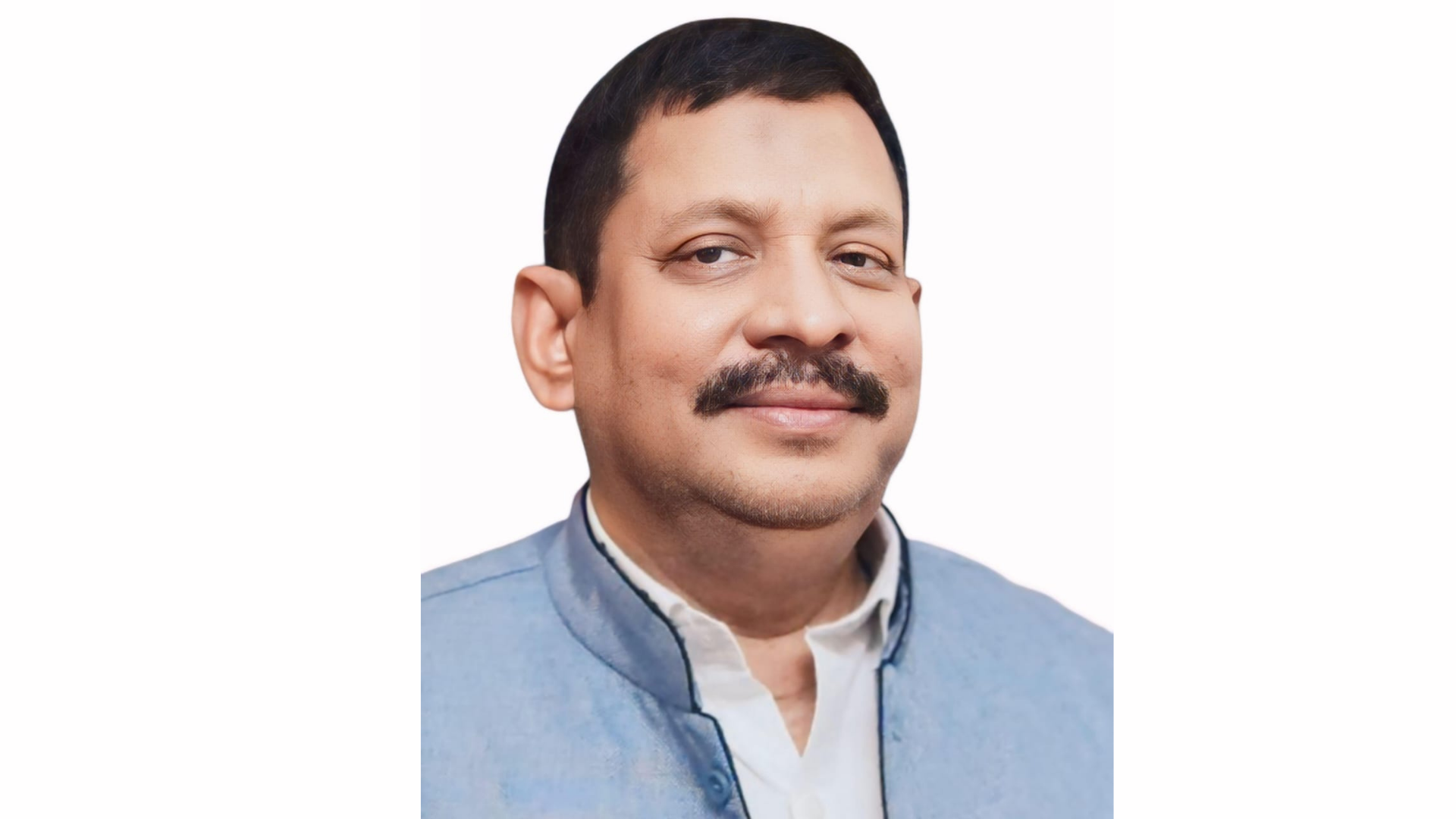
In the arena of professional and technical education the shortfall becomes even more acute. Bihar currently has roughly 44 government polytechnic institutes (offering diploma after Class X) amounting to about 15,000+ seats. For engineering colleges the state boasts around 20 government engineering colleges under the Bihar Engineering University, about 21 aided colleges and about 22 private engineering colleges roughly 60-70 engineering institutions in total. With typical annual intakes of 240-300 students per institution this translates to perhaps 15,000-20,000 engineering seats per year. For medical education, there are around 20 MBBS colleges (including one AIIMS at Patna) with in all 2,700+ MBBS seats across the state. Meanwhile thousands of students pass Class XII with science or commerce aspirations, yet only a small fraction find professional-course seats within the state.
Given these numbers the consequence is troubling: a large number of young Biharis who clear Class XII are unable to find suitable college seats within their home state and hence must migrate to other states for higher education. Reports suggest that in Bihar there are only about seven colleges per one lakh eligible population, one of the lowest densities among major states, and the average enrolment per college exceeds 2,000 indicating pressure on existing institutions. This “educational exodus” not only drains the state of talent but also burdens the families of students who must send youth outside.
Why does this gap persist despite improvements in school-leaving success? First, the speed of expansion in higher-education capacity has failed to keep pace with the surge in pass-outs from schools. Second, professional-course seats (engineering, medicine, management, law) require expensive infrastructure and faculty, and private sector investment in Bihar still lags. Third, rural-urban and gender disparities remain: while girls’ pass-rates have improved, many institutions remain concentrated in urban centres, making access difficult for rural youth. Fourth, quality concerns (infrastructure, teacher strength, accreditation) reduce the appeal of many local colleges, pushing students to aim for institutions in other states.
To stop the student-outflow and retain talent, Bihar must act on several fronts. The first priority ought to be a large-scale expansion of higher-education seats: upgrading degree colleges into full-fledged universities or technical campuses, creating new engineering and medical colleges especially in underserved districts, and significantly increasing polytechnic and community-college seats for those finishing Class X. The state government should partner with the private sector and central agencies, offering land subsidies, infrastructure grants and ease of regulatory clearance to attract new institutions. Meanwhile, mere quantity will not suffice: the quality of higher education must improve. Accreditation of colleges, enhanced faculty recruitment, modern labs and digital infrastructure, and closer industry-academia linkage can make local institutions more competitive and reduce the incentive to migrate.
Furthermore, strengthening rural higher-education access is vital. Centrally located campuses often exclude students from remote districts who face travel and lodging difficulties. Establishing satellite campuses, promoting online-hybrid programmes, and offering residence facilities in rural areas can help bridge this gap. Gender-inclusive policies dedicated seats, financial incentives and safe campus environments will further ensure that increasing numbers of girls who clear school are not left behind at the higher-education threshold.
Another lever is better utilisation of existing infrastructure. Many colleges remain under-utilised or offer limited courses.By collaborative affiliation, branch expansion and flexible scheduling (morning/afternoon shifts), existing seats can serve more students without new-construction. Additionally, state-wide career-counselling programmes are needed so that students finishing Class X or Class XII understand the wide range of options beyond the traditional engineering/medical route such as diplomas, vocational training, and bachelor’s in liberal arts or commerce thereby aligning supply and demand more thoughtfully.
Finally, the government must closely monitor flows of students outside the state and incorporate this data into planning. If tens of thousands leave each year, that signals both talent drain and economic cost both to families and to Bihar’s future workforce. A targeted scholarship scheme for students staying within Bihar and excellence-driven funding for top local colleges may help reverse that flow.
In conclusion, the last ten years in Bihar have seen real progress in school-leaving success, gender-inclusion and enrolment. Yet the bigger challenge lies ahead: transforming this mass of young talent into graduates trained in Bihar, contributing to the state’s economy.The gap between ambitious students and available seats is both a system and a moral challenge.If Bihar rises to it by expanding and upgrading the higher-education ecosystem, making access equitable, and positioning its institutions among the country’s best then the decade ahead could turn from exodus to embodiment of talent staying, learning and thriving in Bihar itself.
Authored and Compiled by
Md. Irshad Ahmad,
Advocate, Supreme Court of India, and Former President, AMU Old Boys’ Association, Delhi.