How AI Is Transforming Government Schools in India: From Last Rank to First with Sampurna Shiksha Kavach (SSK)
How AI Is Transforming Government Schools in India: From Last Rank to First with Sampurna Shiksha Kavach (SSK)
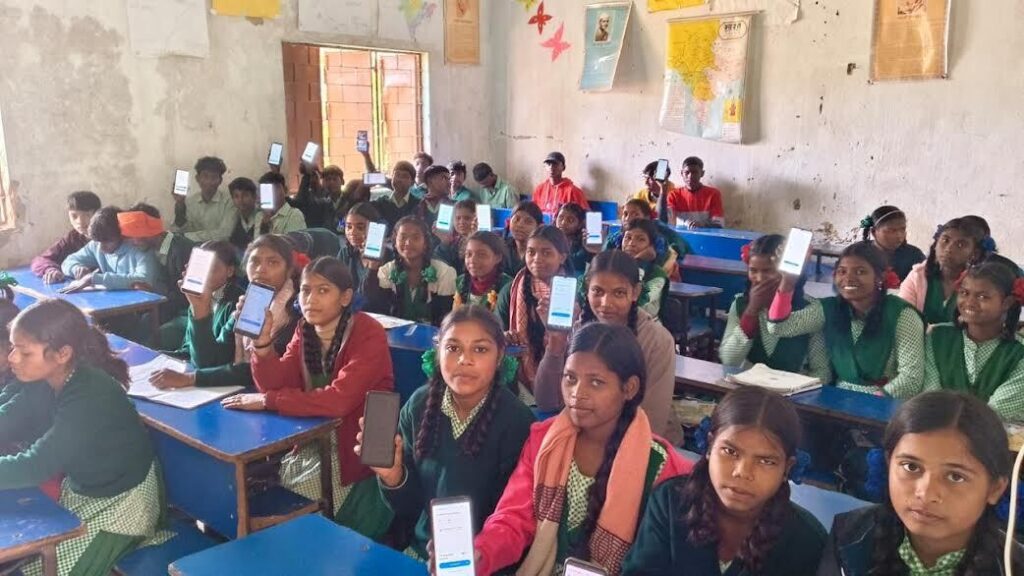
New Delhi: What if a struggling student in a remote village could get instant academic help at 10 PM before going to sleep completely free of cost? Across India, this idea is no longer a possibility but a reality. In several states, government schools once ranked at the bottom of board exam performance are now climbing to the top. Failure rates are dropping sharply, pass percentages are touching nearly 100%, and districts once known for educational struggles are now leading state rankings. At the center of this transformation is Sampurna Shiksha Kavach (SSK) a 24×7 AI-powered personal tutoring program that is quietly rewriting the future of public education in India.
Across Jharkhand, Maharashtra, Madhya Pradesh, Himachal Pradesh, Meghalaya, and Rajasthan, an AI-driven personal tutoring initiative is helping entire government schools improve academic performance not just a handful of top-performing students.
Failure rates have fallen by as much as 70% in a single year, while pass percentages in some districts have increased from 87% to 99.3% within just twelve months. Even districts historically affected by Left Wing Extremism (LWE) are witnessing remarkable educational turnarounds, rising from lower rankings to the top position in state board exams.
The program behind these results is called Sampurna Shiksha Kavach (SSK), a public-private partnership between state governments and Filo, a Delhi-based AI education startup working in formal academic collaboration with NCERT (National Council of Educational Research and Training).
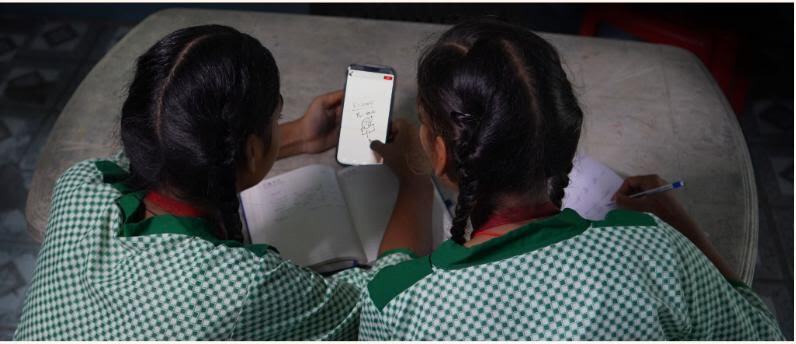
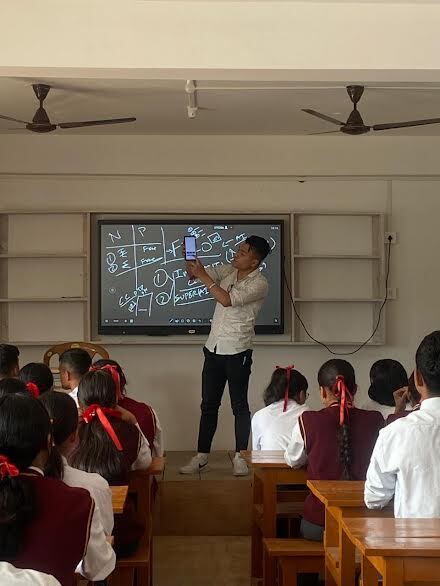
Unlike traditional education models that mainly help already high-performing students improve further, SSK follows a different philosophy helping every child, especially the weakest learners. Through 24×7 live one-on-one tutoring sessions and AI-powered academic support, students studying in government schools receive instant access to personal teachers anytime they need help, free of cost.
Rapid Expansion Across States
Over the past two years, the program has rapidly expanded across multiple states, delivering measurable improvements in student outcomes.
In Vidisha, Madhya Pradesh, a district-level pilot involving 275 students across three government schools generated over 4,192 live tutoring sessions and 4,408 AI-supported learning interactions during its first phase. Several students from the program scored above 90% in the 2025–26 academic session.
Meanwhile, in Bilaspur, Himachal Pradesh, the program was officially launched by the Chief Minister, signaling growing institutional confidence in AI-powered education. Similar state-level launches have also taken place in Meghalaya and Rajasthan.
READ MORE :
SIMS Annual Day Fest 2026 Celebrated with Grandeur at Sri Ram Centre, New Delhi
Three-Day Theatre Festival at Triveni Kala Sangam Enthralls Audience with Powerful Performances
The Maharashtra Story: A Clear Difference in Results
One of the strongest indicators of SSK’s impact came from Sangli, Maharashtra, during the 2026 SSC board examinations.
Among 42 government schools, a clear trend emerged: schools where over 50% of students actively used Filo’s tutoring platform and completed 30,000+ learning sessions experienced only a 2.4 percentage point decline in pass rates year-on-year.
However, schools with lower adoption rates witnessed a much steeper drop of 9.2 percentage points.
The difference between high-usage and low-usage schools stood at 6.8 percentage points in favour of higher platform engagement, despite an overall decline in performance trends statewide.
According to Rohit Kumar, Co-founder of Filo:
“Every district we enter, people tell us the challenges are unique the terrain, the language, the teacher shortages. And they are right. But the learning gap is universal, and so is the desire of a child to get unstuck at 10 PM before going to sleep. We built a platform for that child. The board results are just the system telling us it is working.”
Jharkhand: The Strongest Evidence Yet
Perhaps the most compelling results come from Jharkhand, where SSK has been operational the longest.
The Jharkhand Academic Council (JAC) publishes district-level rankings for all 24 districts, offering one of the clearest ways to track educational progress.
Latehar’s Rise from Rank 13 to Rank 1
Latehar, a district affected by Left Wing Extremism, ranked 13th in Class 12 Science in 2023. By 2025, it climbed to the #1 position, maintaining that rank in 2026 with an impressive 93.25% pass rate — the highest recorded Class 12 Science pass rate in Jharkhand over three years.
In Class 10, Latehar improved from 21st place to 4th, maintaining that position for two consecutive years.
Gumla’s Massive Jump
Gumla, identified as a NITI Aayog Aspirational District, ranked 20th in Class 10 in 2025. Just one year later, it became Jharkhand’s top-ranked district.
Its pass percentage rose dramatically from 87% to 99.3%, while the number of students achieving First Division a crucial benchmark for university admissions increased by 66%.
Dumka’s Historic Improvement
In Dumka, where SSK has operated for nearly four years and covers around half of the district’s schools, Class 10 rankings improved from 24th place to 2nd position.
More importantly, SSK schools significantly outperformed non-SSK schools within the same district.
The pass rate comparison showed:
- SSK Schools: 98.2%
- Non-SSK Schools: 77.3%
This represents a 20.9 percentage-point performance gap, making it one of the strongest controlled comparisons, since both sets of schools operate under the same district infrastructure and teacher availability.
Major Turnaround in Ramgarh and West Singhbhum
In Ramgarh, 21 SSK schools recorded a 70% decline in failure rates within one year.
The district’s five weakest-performing schools showed an extraordinary 20.8% improvement, marking the strongest academic turnaround in Ramgarh’s recorded history.
Similarly, in West Singhbhum, a tribal-majority district, Class 12 Science rankings improved from 18th to 9th within two years, with SSK schools outperforming non-SSK schools by nearly 15 percentage points.
Success in Jharkhand’s CBSE Government Schools
The impact is also visible in Jharkhand’s CM Schools of Excellence (CMSOEs) flagship government schools affiliated with CBSE.
Schools operating without SSK recorded only around 2% performance growth.
However, schools using SSK achieved more than 12% academic growth, with three SSK-enabled CMSOEs crossing 98% pass rates, including a remarkable 100% result at CM School of Excellence Masalia, Dumka.
Across SSK-supported districts, the number of students achieving First Division in board examinations increased by up to 50%, significantly improving access to higher education opportunities.
Global Academic Validation from the United States
Filo’s model has also received international academic validation.
A quasi-experimental study conducted by Johns Hopkins University in Jefferson County, USA, measured Filo’s impact on standardised test performance using a matched comparison group.
The findings showed:
- Male students recorded a +13.7-point improvement in Mathematics
- African-American students showed a +10.4-point increase
- Increased tutoring sessions were strongly linked to improved English Language Arts scores
Researchers noted that the communities benefiting most in the U.S. study were structurally similar to India’s underserved populations — including low-income backgrounds, high student-teacher ratios, and limited after-school academic support.
Recognition from the Government of India
The Government of India has formally recognised the SSK initiative four times.
The program received:
- Gold Award at the 28th National Awards for e-Governance (2025)
- Gold Award at the 26th National Awards for e-Governance (2023)
- 1st Position in Education at the NITI for States Awards (2025)
- Recognition at the G20 Digital Innovation Alliance event organised by MeitY
These honours place SSK among the country’s most recognised examples of technology-driven public service innovation.
A New Model for Public Education
At its core, Sampurna Shiksha Kavach (SSK) is changing how educational success is measured and delivered.
Instead of focusing only on a small group of high achievers, the model is designed to support every student regardless of background, academic level, or geography.
By providing personalised, real-time academic help in the language and subject students struggle with most, SSK is proving that meaningful educational change at scale is possible.
From Latehar to Vidisha, Dumka to Sangli, the results are becoming too consistent to ignore.
This is no longer an experiment.
It is increasingly becoming a repeatable model for transforming public education in India.



)