Union Budget 2026–27: A Nation Standing on the Heights of Expectations, with a Shadow of Restlessness Hidden Amid Hopes
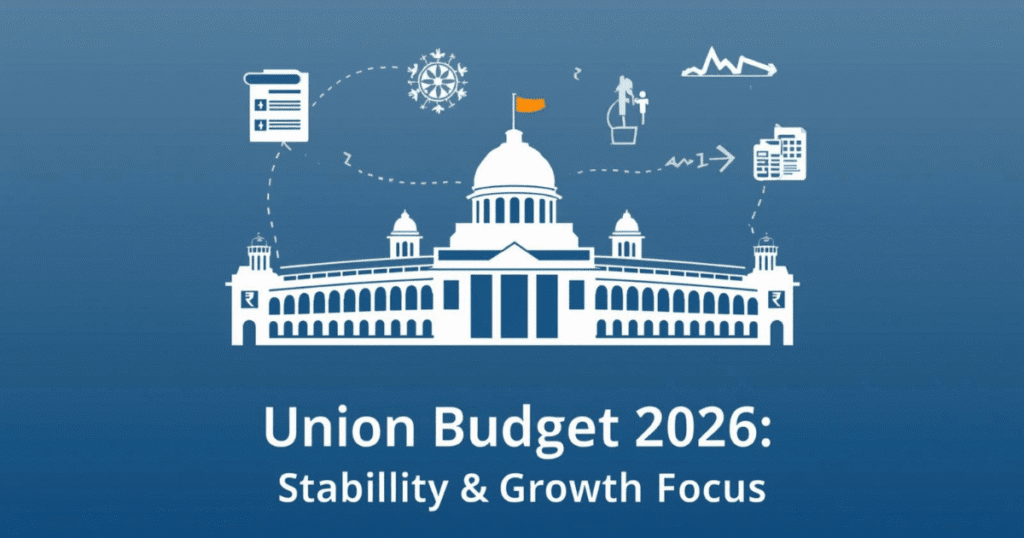
Union Budget 2026–27: A Nation Standing on the Heights of Expectations, with a Shadow of Restlessness Hidden Amid Hopes
Binod Kumar Singh
Independent Journalist & Columnist
In the democracy of the nation, the budget is not merely a government document of income and expenditure.
It is the collective heartbeat of the country, where the hopes, dreams, complaints, and struggles of millions breathe together. The Union Budget 2026–27 is exactly such a reflection—on one side, the claim of rapid development, and on the other, the sting of inflation in the common man’s pocket and the anxiety of employment. This budget is a mirror of India swinging between hope and disappointment, where there is both the sparkle of happiness and the depth of sorrow.
When Finance Minister Nirmala Sitharaman stated in the Lok Sabha that public capital expenditure has risen from ₹2 lakh crore in 2014–15 to ₹11.2 lakh crore in 2025–26, and now it is proposed to be increased to ₹12.2 lakh crore in 2026–27, this announcement was not just a number. It was a message of an India laying the foundation of its future through roads, railways, ports, digital networks, and industrial corridors. Yet the question also arises: will these bricks of development bring warmth to the poor man’s hut, or will they remain merely the towering buildings of metropolitan dreams?
To strengthen confidence in private investment, the government has announced an Infrastructure Risk Guarantee Fund, which will provide partial credit guarantees to lenders. This is a bold step, because private sector participation is essential in the nation’s development journey. At the same time, the common citizen worries—if the government bears the risks of big developers, who will bear the risks of the small farmer and the laborer? The bridge of development will be strong only when both its ends are equally secure.
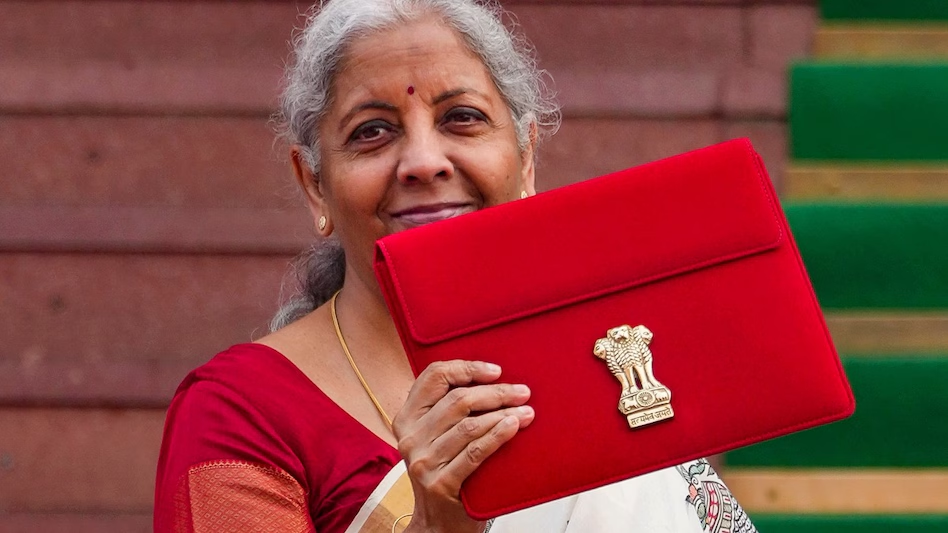
The fiscal deficit is estimated to remain at 4.3% of GDP, compared to 4.4% last year. The debt-to-GDP ratio is also projected at 55.6%. This picture of economic discipline provides relief to markets and confidence to investors. But for the common people, the same old question remains: will this discipline translate into affordable education, better healthcare, and sustainable employment in their lives?
The budget includes several announcements for farmers, livestock keepers, and rural India. Emphasis on increasing the income of small and marginal farmers, development of 500 reservoirs for fisheries, loan-based subsidy programs for animal husbandry, support for coastal crops, and plans to make coconut, cashew, cocoa, and sandalwood global brands—these sound promising. For rural India, this feels like a breath of relief. Yet the farmer standing in his field still asks: will these schemes move beyond paper and reach the ground, or will they be buried in the dust of files?
The launch of a multilingual AI tool like Bharat-VISTAAR will help farmers make modern decisions. It is a new chapter of the digital revolution. But alongside it arises a concern: is every farmer digitally capable? Do villages have the internet connectivity and training systems needed to truly make this AI tool a companion of the farmer?
The announcement of the Khelo India Mission for the sports sector is also a ray of hope for youth. Over the next decade, it aims to nurture sports talent, promote sports technology, and develop infrastructure. As India rises on the global sports मंच, this initiative could take it to new heights. Yet the child running barefoot in the village soil still wonders: will he have a playground, a coach, and resources?
With emphasis on enhancing youth capacity through the service sector, a permanent committee on education-to-employment and entrepreneurship, and the goal of achieving a 10% global share in services by 2047, the announcements point toward the future. But for today’s youth, standing in the crowd of competitive exams and facing unemployment, this future seems distant and blurred. They need jobs today, opportunities today, and trust today.
Banking sector reforms, expansion of the corporate bond market, promotion of municipal bonds, and increased investment limits are positive for the financial world. But for the common citizen, banking reforms matter only when loans become cheaper, savings remain secure, and economic life becomes easier.
The announcement of She-Marts for rural women-led enterprises signals a social transformation. Women from self-help groups will now connect with markets and become entrepreneurs. This is one of the most beautiful images of the budget, where development carries the face of women’s leadership. It is a ray of hope that can shine in the eyes of rural India.
Plans for tourism—establishing a National Institute of Hospitality, training 10,000 guides, creating a digital knowledge grid, developing trekking and hiking trails, and upgrading archaeological sites—will energize India’s cultural economy. Employment opportunities will grow. But will these jobs be permanent or merely seasonal?
READ MORE :
Congress slams BJP over mistreatment of Shankaracharya at Magh Mela
Vineeta Yadav Exposes Hidden Reality of Rural India in Her Book
Senco Gold & Diamonds brings “Senco Di Wedding – Before The Vows” to Delhi
In healthcare and education, several announcements were made:
upgrading health institutions, adding one lakh new health professionals, establishing regional hubs for medical tourism, and setting up Ayurveda institutes. It seems the government is prioritizing health. Yet overcrowded government hospitals, shortage of medicines, and costly treatment remain the pain of the common man.
For the textile industry, the National Fiber Mission, Samarth 2.0, mega textile parks, and handloom-handicraft programs could boost rural employment. This is a blend of India’s tradition and modernity. Yet the weaver still struggles with low wages and harsh market realities.
The biggest attraction was the announcement of 20 new waterways and seven high-speed rail corridors. This is India’s dream of mobility. From Mumbai to Pune, Delhi to Varanasi, Chennai to Bengaluru, the high-speed rail network will write a new story of connectivity. It is a pride of development. But the question remains: will this journey be affordable for the common traveler, or will it become a luxury only for the upper class?
The government has proposed initiatives in seven areas of economic growth—manufacturing, MSMEs, energy security, urban development, capital goods, textiles, and biopharma strength. This is a comprehensive roadmap. Schemes like the Semiconductor Mission and Rare Earth Corridors will strengthen India in global competition.
The truth of the Union Budget 2026–27 is this: it is both a bouquet of hopes and a thorn of disappointments. It is a declaration of development and also a reflection of the common man’s worries. The joy is that India is moving toward the future. The sorrow is how long it will take for this future to reach the doorstep of every home.
The Union Budget 2026–27 is an optimistic government document, but its real test will be on the ground— in the farmer’s field, in the worker’s hands, in the youth’s employment, in a woman’s enterprise, and in the poor man’s plate. The budget speech is full of words, schemes, and heaps of official figures. Yet the common citizen asks—will dreams come true this time? This is the story of the budget: India standing between hope and despair, searching for its path between joy and sorrow.