Across the world, the New Year is welcomed in diverse and colorful ways. In some places, the sky lights up with fireworks; elsewhere, the aroma of traditional dishes fills homes and courtyards. In many cultures, symbolic rituals are performed to invoke good fortune for the year ahead. Among these traditions, Colombia—located in Latin America—has a distinctive and meaningful New Year custom known as La Maleta.
The literal meaning of La Maleta is “the suitcase.” In several regions, this tradition is also called Correr con la maleta, which means “running with the suitcase.” As part of this ritual, on the night of December 31 or in the very first moments of the New Year, people take an empty suitcase and step out across the threshold of their homes. They walk—or sometimes run—around their street, neighborhood, or even symbolically in the direction of an airport. The belief behind this practice is that the first action of the New Year sets the tone for the entire year. Carrying an empty suitcase thus becomes a symbol of making the coming year dynamic and mobile, inviting travel and new opportunities. This belief rests not on logic but on collective faith and cultural memory passed down through generations. While the sight of people running around with empty suitcases appears playful and festive, the emotion behind it is deeply human and meaningful.

The core idea of La Maleta is the wish to travel more in the coming year. Here, travel is not limited to physical movement across places; it also symbolizes mental, cultural, and emotional expansion. The empty suitcase does not signify emptiness but rather a future filled with possibilities. It represents a space waiting to be filled with new experiences, encounters, and memories. In this sense, the ritual expresses a natural human desire to look beyond familiar boundaries.
In the modern context, the significance of this tradition becomes even stronger. Fixed routines, work pressure, mechanized lifestyles, and limited time often make travel and pause difficult. In such circumstances, walking with an empty suitcase is not merely about the desire to go on trips—it becomes a symbol of breaking free from stagnation. It reminds us that life is not meant to remain confined to one place, but to continuously expand through new experiences.
One of the most interesting aspects of La Maleta is its sense of collectivity. There are no barriers of age, class, or economic status. Children, youth, and the elderly all participate with laughter and joy. Many families treat it like a game; neighbors smile at one another, and the entire atmosphere fills with celebration. In this way, the ritual moves beyond individual wishes and becomes a community celebration, where dreams are imagined together rather than alone.
This tradition also offers a subtle critique of modern life. In today’s fast-paced world, success is often measured in terms of income, stability, accumulation of assets, and constant productivity. In contrast, the empty suitcase points toward a different truth—that the essence of life lies not only in accumulation, but also in those moments that enrich us from within. Travel introduces us to different cultures, languages, and ways of life, making our sensitivity more humane.
Travel is not merely about moving from one place to another; it is a deep dialogue with time and with oneself. It offers us the chance to pause, to understand ourselves, and to break free from rigid thoughts, allowing us to flow in new directions. Every new path, every new place, and every new breeze carries something special. Travel changes not only scenery but also perspective and experience. It draws us out of a narrow well into an open sky of life, where we rediscover ourselves. In essence, journeys to new places are external excuses for inner journeys.
Indian scholar and traveler Rahul Sankrityayan, in his essay “Athato Ghumakkad Jigyasa”, described travel as a means of self-expansion. He famously said that there is no university greater than travel and no classroom larger than the road. The languages, struggles, clothing, and food of new regions teach us that viewing the world through a single lens is unjust. Travel takes us from “I” to “we” and turns us into citizens of the world.
Journeys do not only enrich the present; they also become priceless treasures of memory. In stagnant moments of life, these memories give us reasons to smile. Moreover, many studies show that travel benefits both mental and physical health. Time spent away from routine reduces stress, increases energy, and restores balance in life. In this way, travel becomes a form of healing for both mind and body—without medicine.
Seen in this light, Colombia’s La Maleta tradition is more than a ritual; it is a philosophy of life. Every step taken with an empty suitcase symbolizes the belief that the future is still unwritten. It urges us to reflect on whether we, too, are leaving some space empty in our lives—so that the New Year can fill it with new experiences, journeys, and possibilities. The world is incredibly beautiful; every corner, every direction, every place, and every breath of air carries magic. Why not make it one of life’s greatest goals to see as much of this world as possible with our own eyes? In true essence, life feels complete only when we strive toward this purpose as well.
La Maleta reminds us that hands already full often cannot hold anything new, but an open heart and an empty suitcase can carry the entire world. This is the true beauty of the tradition—and perhaps one of life’s most beautiful lessons.
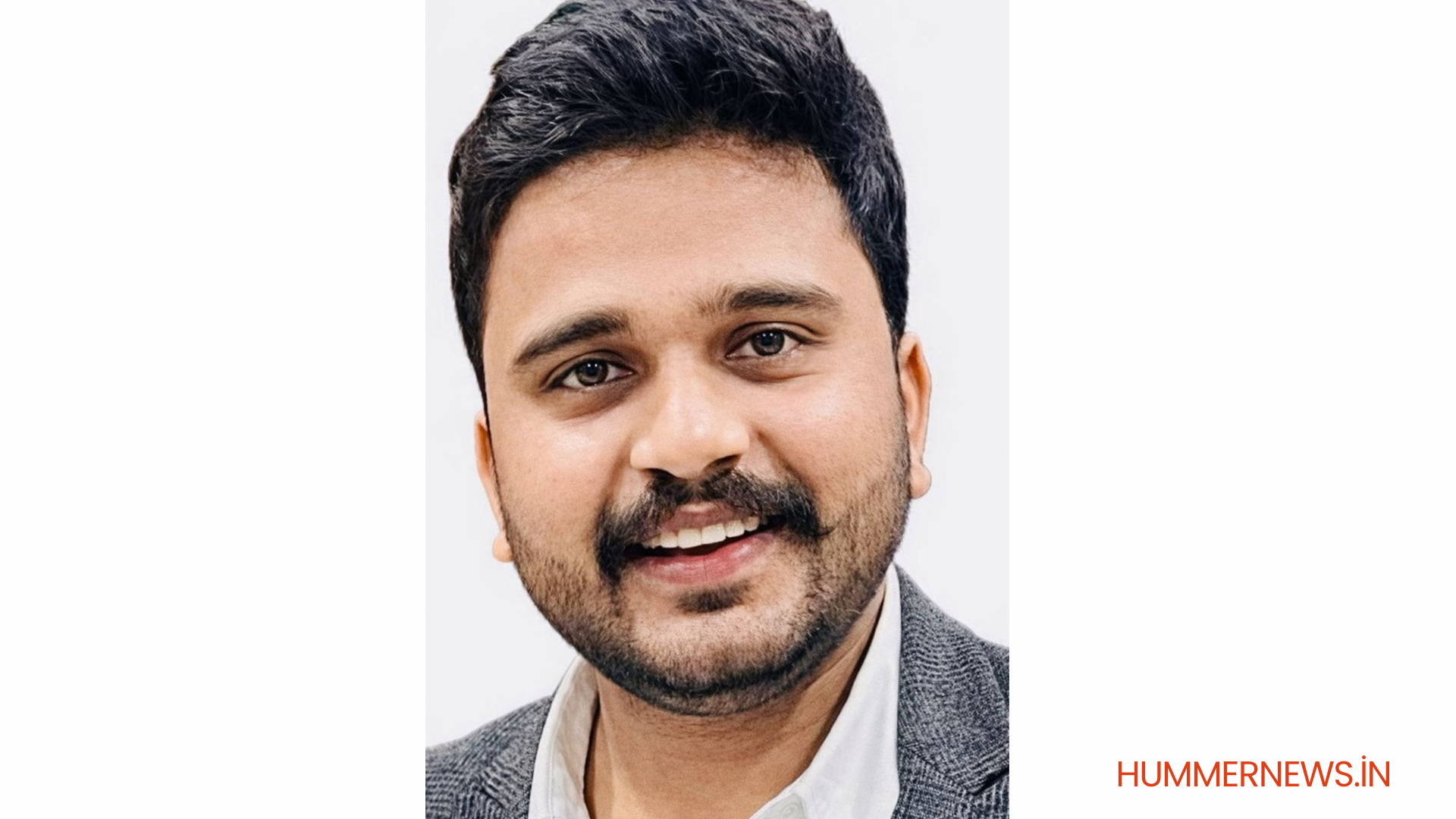
Mohammad Zubair
Master of Social Work (MSW) – Gold Medalist
NET/JRF – Social Work
Specialization: Industrial Relations and Personnel Management (IRPM)