Jamia Hamdard Observes Founder’s Day, Remembers Visionary Hakim Abdul Hameed
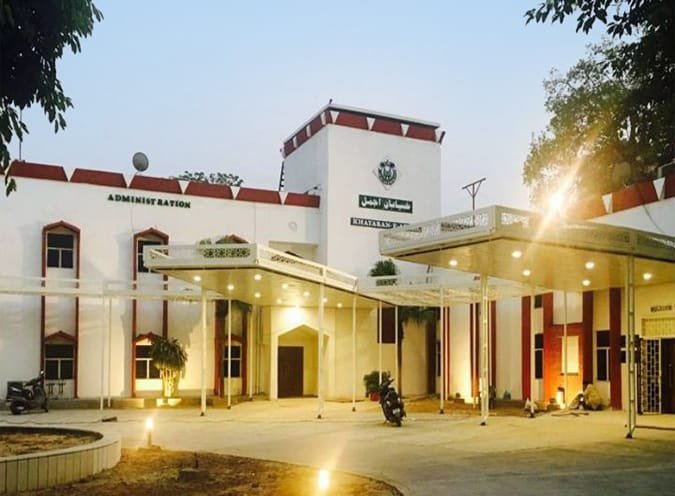
Jamia Hamdard Observes Founder’s Day, Remembers Visionary Hakim Abdul Hameed
Prof (Dr) Ihtiram Raza Khan, Post Doc PhD
SEST Jamia Hamdard
NEW DELHI:
Jamia Hamdard observed Founder’s Day on Sunday to remember its founder, Hakim Abdul Hameed, a visionary physician, educationist, philanthropist and institution builder whose life was devoted to the ideals of education, healthcare, research, culture and public service.

Born in Delhi on September 14, 1908, Hakim Abdul Hameed inherited a modest Unani medical enterprise established by his father, Hakim Hafiz Abdul Majeed, in 1906. What began as a small clinic named Hamdard gradually evolved under his leadership into a wider movement encompassing medicine, pharmaceuticals, education, research and social welfare.
Hameed’s vision went far beyond the expansion of a family enterprise. In August 1948, he transformed Hamdard from a private commercial organisation into a Wakf, ensuring that its future resources would be devoted to public welfare. The decision reflected his remarkable understanding of institution building and his belief that economic resources could become instruments of social transformation.
Over the following decades, his vision resulted in the establishment and development of several institutions, including the Hamdard National Foundation, Hamdard Education Society, Hamdard Study Circle and Hamdard Public School. He also promoted cultural and intellectual initiatives such as the Ghalib Academy and the Hamdard Institute of Historical Research. His initiatives reflected an unusually broad understanding of education, combining professional knowledge with literature, history, culture and social development.
His commitment to education and scientific advancement became particularly visible with the establishment of Hamdard Tibbi College in 1963 and Hamdard College of Pharmacy in 1972. These initiatives eventually contributed to the creation of Jamia Hamdard, which received deemed university status on May 10, 1989. The university was formally inaugurated by Prime Minister Rajiv Gandhi on August 1, 1989.
Hameed’s contribution extended beyond Jamia Hamdard. He served as Chancellor of Aligarh Muslim University from 1996 until his death in 1999 and was honoured with the Padma Shri in 1965 and the Padma Bhushan in 1992. He also worked to strengthen academic and cultural relations between India and the Arab world.
READ MORE :
SIMS Annual Day Fest 2026 Celebrated with Grandeur at Sri Ram Centre, New Delhi
Three-Day Theatre Festival at Triveni Kala Sangam Enthralls Audience with Powerful Performances
Remembering his disciplined approach to life, Jamia Hamdard has highlighted his saying: “The rising Sun will never find me in the bed.” The words capture the energy, discipline and sense of purpose that characterised his life.
For the Jamia Hamdard community, Hameed’s legacy is not confined to buildings or institutions. He was a visionary who understood that education could empower individuals, research could advance society and philanthropy could create institutions capable of serving generations.
More than a century after the establishment of the first Hamdard clinic in Delhi, his founding philosophy remains relevant. Founder’s Day therefore serves not only as an occasion to remember Hakim Abdul Hameed, but also as a reminder to carry forward his vision of knowledge, compassion, innovation and service to society.