Fear of the Uniform or Faith in the Rule of Law?
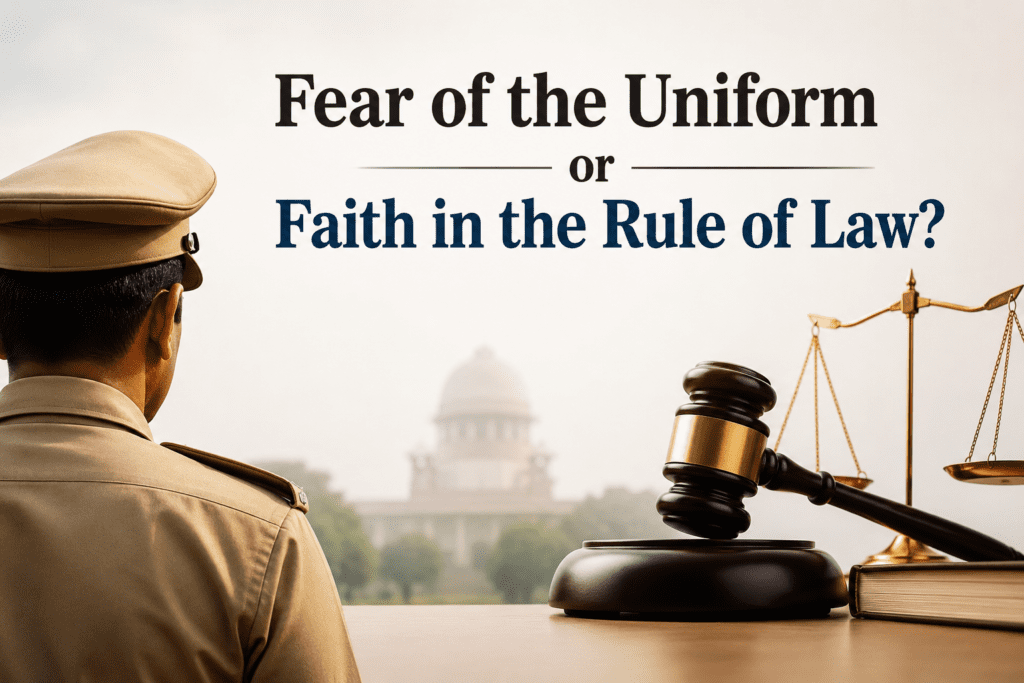
Fear of the Uniform or Faith in the Rule of Law? A Godda Incident, Journalist Safety, and Serious Questions About Law and Order in Jharkhand
Article by Binod Singh ‘Takiawala’
Independent Journalist and Columnist
The success of a democracy is not measured merely by elections, governments, or constitutional institutions. It is also judged by how safe, respected, and free ordinary citizens feel. A democracy remains truly vibrant when citizens, social activists, and journalists can exercise their rights and ask questions without fear. However, when allegations arise that institutions responsible for upholding the law themselves become a source of fear, serious concerns emerge about the health of democracy.
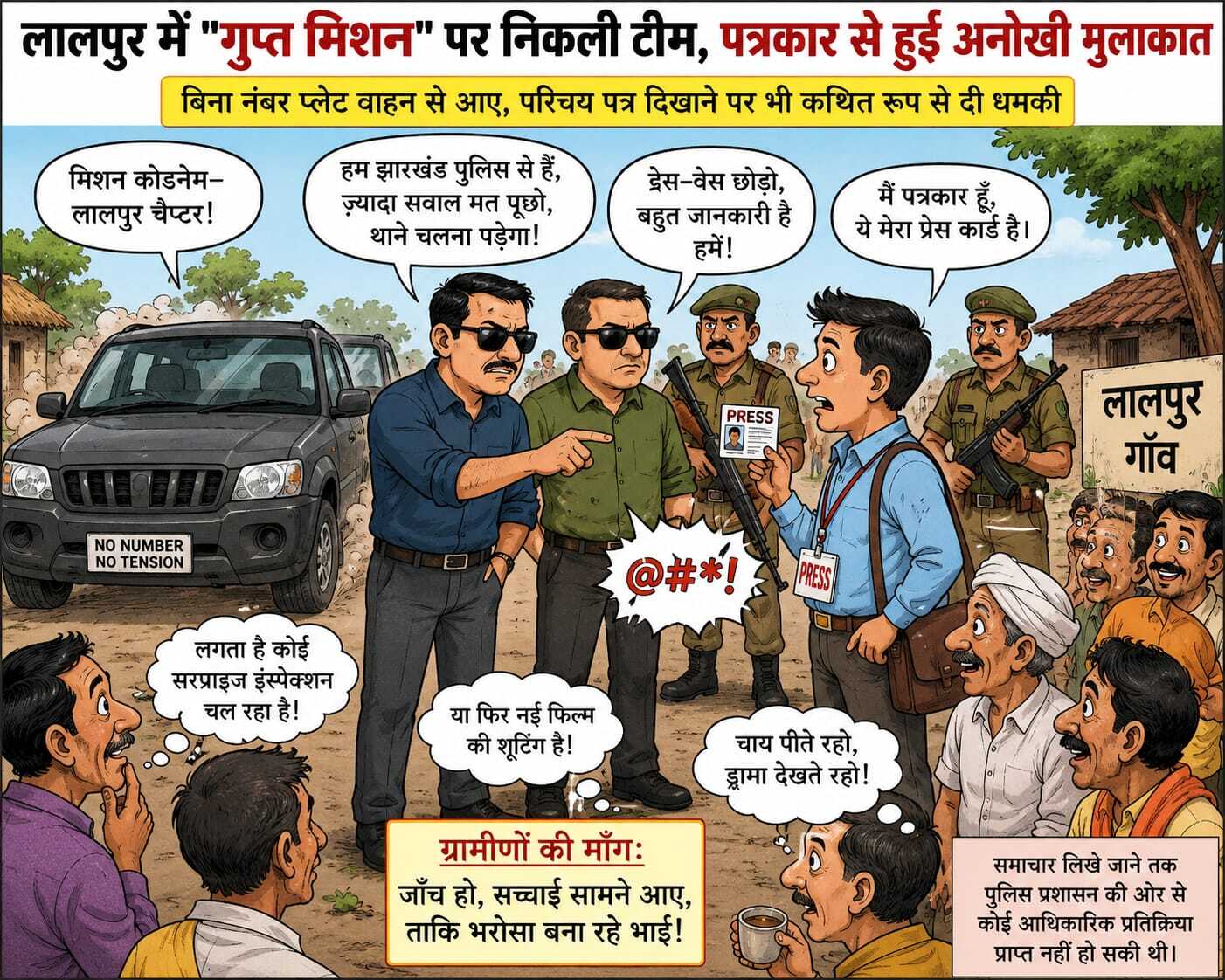
A reported incident in Lalpur village under Mufassil Police Station of Godda district on June 25, 2026, has raised several such questions. It has been alleged that some police personnel in plain clothes arrived in an unnumbered vehicle and displayed police authority while questioning local residents. It has also been alleged that even after a recognized journalist identified himself by showing his press credentials, he was subjected to inappropriate behaviour. While these allegations require an impartial investigation and the police administration’s version is yet to be heard, the incident nevertheless raises broader questions about democracy, journalism, and police accountability.
The most important question is whether a journalist is merely part of a crowd. The answer is clearly no. A journalist is regarded as a pillar of democracy. He represents neither the government nor the opposition. His role is to serve as a bridge between the people and those in authority. The freedom of expression guaranteed under Article 19(1)(a) of the Constitution finds one of its strongest expressions through journalism.
It is noteworthy that the journalist associated with this incident has been engaged in active journalism for nearly three decades, including in the national capital, New Delhi. He has been associated with several national and regional journalist organizations, press associations, and media forums, and has consistently written on public issues, administrative accountability, democratic values, and rural development.Therefore, if a senior and accredited journalist is allegedly subjected to intimidation or disrespect, the issue transcends an individual grievance and touches upon press freedom and democratic values.
The Supreme Court of India has repeatedly emphasized that freedom of the press is integral to democracy. If journalists cannot work without fear, the flow of truth and information to the public is inevitably affected. Therefore,any alleged misconduct towards a journalist becomes a matter of public concern and democratic accountability.At the same time, it is equally true that the police system forms the backbone of any state. In a state like Jharkhand, the responsibilities of the police are especially challenging. The state has long faced issues such as extremism, organized crime, illegal mining, cybercrime, and social tensions. In recent years, Jharkhand Police has achieved notable successes in crime control and anti-extremist operations.Godda district is no exception.Police authorities frequently undertake operations against illegal arms, criminal gangs, land-related disputes, and organized crime. In such circumstances, swift and effective police action is often necessary. However, in a democracy,the legitimacy of any action is determined not only by its objective but also by the procedure through which it is carried out.This is where the balance between police powers and citizens’ rights becomes crucial. Article 21 of the Constitution guarantees every citizen the right to live with dignity. No individual should be subjected to humiliating treatment. If police officers question a citizen, that citizen has the right to know who is conducting the inquiry and under what authority.
READ MORE :
SIMS Annual Day Fest 2026 Celebrated with Grandeur at Sri Ram Centre, New Delhi
Three-Day Theatre Festival at Triveni Kala Sangam Enthralls Audience with Powerful Performances
Another important question arises when police action is carried out in plain clothes. In an era when criminals sometimes impersonate law enforcement officials, it is natural for citizens to seek verification.Transparency, therefore,is not merely a citizen’s right but also a necessity for the credibility of the police.The fundamental principle of democracy is that no one is above the law. This principle applies equally to citizens and to those in uniform. Police authority derives its legitimacy from the Constitution and the law, not from fear.If any citizen or journalist feels wronged, they have the right to seek redress, demand an inquiry, and pursue justice.The need today is not for a debate of “Police versus Journalists” but for strengthening trust between the two. Both serve democracy in their own ways. The police enforce the law, while journalists inform the public. Ultimately, both are meant to serve the public interest.Whatever conclusion the Lalpur incident may eventually reach, it has raised an important question: Do we want governance based on fear or governance based on trust?The democratic answer is clear.
The uniform deserves respect, but the Constitution stands above all. Journalists deserve respect because they represent the public’s voice. Above all, ordinary citizens deserve respect because they are the true sovereigns of a democracy.Only when there is sensitivity in authority, fearlessness in journalism, and confidence among citizens can law and order truly become strong. That is the spirit of democracy, the essence of the Constitution, and the greatest strength of India.