India on Track to Become the World’s Third-Largest Economy
India on Track to Become the World’s Third-Largest Economy
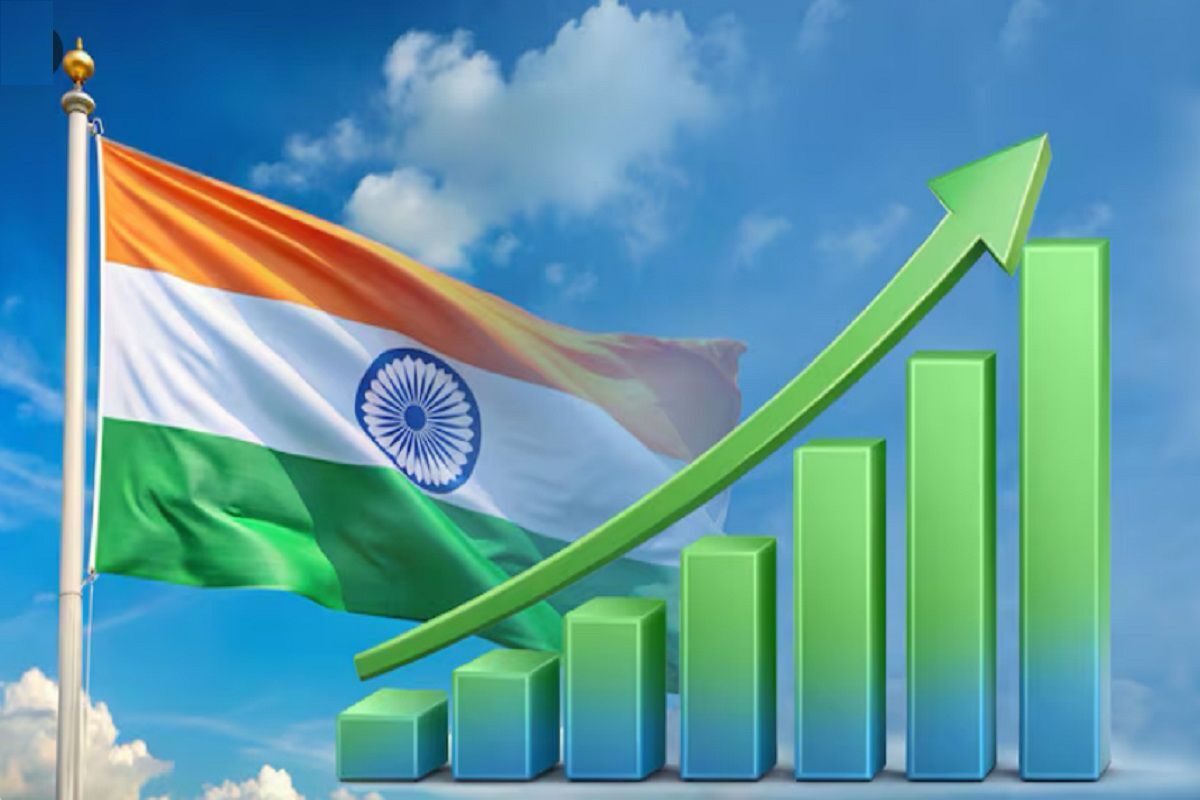
According to recently released government data, India has surpassed Japan to become the world’s fourth-largest economy. India’s current Gross Domestic Product (GDP) stands at approximately USD 4.18 trillion. Globally, only three countries now rank above India— the United States, China, and Germany— with economies valued at USD 30.6 trillion, USD 19.4 trillion, and nearly USD 5 trillion respectively. The Government of India estimates that by 2030, India will overtake Germany to become the world’s third-largest economy. Meanwhile, a recent report by international rating agency Ernst & Young projects that India’s economy could reach USD 26 trillion by 2047.

Clear indicators of sustained and robust growth in the Indian economy are evident in recent data. In the second quarter of the 2025–26 financial year, economic growth stood at 8.2 percent, compared to 7.8 percent in the first quarter and 7.4 percent in the fourth quarter of 2024–25. This consistent upward trend reflects the strong foundation on which India’s economy is advancing. Leading global institutions such as the World Bank, Moody’s, the International Monetary Fund (IMF), and the Organisation for Economic Co-operation and Development (OECD) have also presented positive assessments of India’s economic outlook. According to their estimates, India’s growth rate is expected to remain above 6 percent during 2025–27, while global economic growth is projected at around 3 percent— indicating that India’s economic momentum is more than double the global average.
At a time when the global economy is facing uncertainty and several developed nations are showing signs of recession, India’s positive economic indicators are particularly encouraging. The global landscape is currently marked by trade wars, energy crises, and geopolitical tensions, resulting in instabilit
y in import-export policies, sharp fluctuations in energy prices, supply chain disruptions, and the economic consequences of political and military conflicts. Against this backdrop, a natural question arises: what are the concrete factors providing stability and resilience to India’s economy amid global uncertainty, and which structural drivers are ensuring its long-term growth potential?
India’s rapid economic growth is supported by a strong ecosystem of long-term structural advantages. Foremost among these is India’s vast and young working-age population. By 2030, it is estimated that nearly 68.9 percent of the population will fall within the working-age group of 15 to 64 years, with approximately 1.04 billion people forming part of the workforce. India alone is expected to contribute nearly one-quarter of the total increase in the global labor force over the next decade. With a median age of 28.4 years, India’s young population creates a favorable environment for productivity, innovation, and entrepreneurship. This demographic advantage is set to directly benefit labor-intensive industries, manufacturing, and the services sector, positioning India as a potential global manufacturing hub.
Another major pillar strengthening India’s economic momentum is its rapidly expanding startup ecosystem. Currently, India hosts over 125 unicorn startups, with their number growing at an average annual rate of 66 percent over the past four years. This ecosystem has not only boosted innovation and job creation but has also positioned India as an attractive destination for global investors. India’s progress in sectors such as digital technology, fintech, healthtech, and edtech highlights its technology-driven growth potential.
The manufacturing sector also presents significant opportunities. Under the Production Linked Incentive (PLI) scheme, investment proposals worth approximately ₹2.5 lakh crore have been received across 14 key sectors. This initiative has the potential to shift nearly 43 percent of workers currently dependent on agriculture toward manufacturing and industrial employment. Alongside increased government and private investment in infrastructure, India’s industrial base is expected to strengthen further. These efforts reinforce flagship initiatives such as “Make in India” and “Atmanirbhar Bharat,” while also boosting exports and reducing reliance on imports.
An important factor that could further enhance India’s growth potential is the increased participation of women in the workforce. According to the Periodic Labour Force Survey, the female employment rate rose from 22 percent in 2017–18 to 40.3 percent in 2023–24. Nearly 49 percent of students enrolled in higher education are women, indicating a significant rise in female labor force participation in the coming years. Increased participation by women not only boosts productivity and household income but also strengthens social inclusion. According to the IMF, if women’s participation in India’s workforce were to match that of men, India’s GDP could increase by up to 27 percent. In this context, the Ministry of Labour and Employment has formulated a strategic plan to raise the female labor force participation rate from 41.7 percent in FY 2024 to 55 percent by 2030.
The digital economy has also emerged as a powerful foundation of India’s rapid economic growth. Between 2014 and 2019, India’s digital economy grew at a rate of 15.6 percent— nearly two and a half times the overall GDP growth rate. Digital payments and technology-driven systems have enhanced financial inclusion, improved tax transparency, and helped integrate micro, small, and medium enterprises into the formal economy. The global acceptance of India’s Unified Payments Interface (UPI) stands as strong evidence of this digital strength. UPI has already been adopted in countries such as the United Arab Emirates, Singapore, France, Nepal, Bhutan, Sri Lanka, Mauritius, Qatar, and Trinidad and Tobago, with plans to expand to Japan, Peru, and several European nations in the near future. Through digital innovation, India is establishing a strong presence in the global financial architecture.
Alongside economic expansion, green energy and sustainable development are becoming integral components of India’s long-term economic strategy. India has committed to achieving net-zero emissions by 2070 and reducing carbon intensity by 45 percent by 2030. The government is placing strong emphasis on green infrastructure, electric vehicles (EVs), and clean energy projects. Government support of approximately USD 14.5 billion has been announced for the EV ecosystem, and it is estimated that nearly 100 million people could shift toward EV adoption by 2030. This transition is expected to create new green jobs, reduce energy import costs, and strengthen India’s role in global climate leadership.
On the inflation front, India’s recent performance has also been encouraging. At the beginning of 2025, retail inflation based on the Consumer Price Index stood at 4.26 percent, declining sharply to 0.71 percent by November 2025. In response to this significant reduction in inflation, the Reserve Bank of India adopted an accommodative monetary stance, cutting the repo rate by 25 basis points to 5.25 percent. This move signals improved price stability and holds strong potential to stimulate investment, consumption, and overall economic activity.
It is important to note that for sustained long-term momentum, India’s economy must not focus solely on increasing size but must advance toward high-quality, inclusive, and sustainable growth. Prioritizing investment in human capital sectors such as education and healthcare, maintaining an investment-friendly environment, continuing economic reforms, and implementing long-term development strategies are essential. Encouraging innovation and entrepreneurship can further accelerate production, employment, and productivity. If demographic advantages, female labor force participation, manufacturing expansion, and the green transition are effectively harnessed, India has the full potential to become the world’s third-largest economy well before 2047 and achieve the vision of a developed India.
Mohammad Zubair
Master of Social Work (MSW) – Gold Medalist
NET/JRF – Social Work
Specialization: Industrial Relations and Personnel Management (IRPM)
Current Address: Mukherjee Nagar, Delhi – 110054
Contact: 8009037575