Why is the reclamation of human values a priority today?
The unfortunate suicide of a second-year student of the Bachelor of Dental Surgery, Sharda University, after reportedly facing humiliation by faculty over the alleged forging of a signature has shocked the entire nation. The student was allegedly told by her professor ‘not to show her face in the class again’. This alleged type of hostile action by the faculty, where the student felt so deeply embarrassed that she committed suicide, yet once again shows us a mirror of the decay of values in our society, raising the question of public opinion on how we treat our youth.
As many of these cases of moral and ethical decay garner national attention and large numbers of citizens read and view these stories in utter disbelief, the time has come for a spirited effort to reclaim the deep-rooted human values which has been part and parcel of tradition and culture. It was just over a month ago when the Sonam Raghuvanshi case dotted the national headlines. Many then said how someone could get her husband killed during a honeymoon. The nation still remembers the chilling details of the Shraddha Walkar case. Shraddha was murdered in 2023, allegedly by her partner in Delhi. Her body was dismembered, and the remains were scattered across the city.
This incident has sparked widespread opinion among citizens who are calling for a reassessment of our educational values and ethics.
Explaining the reasons for the fast declining values in our society, which starts right from families and institutions, Neelakanta Radhakrishnan, a senior Gandhian, observed that the normalization of fast-tracking success and achievements at any cost, even at the cost of sacrificing morality, is the key to the destruction of ethos. Mahatma Gandhi had warned of this decay of civilizational values and ethos in his seminal book, Hind Swaraj, Radhakrishnan points out. According to him, the hunger for power, wealth, and success by any means leads an individual to humiliate another individual or many of the heinous cases that get reported in greater frequency in today’s world. In the court of public opinion, these actions reflect a serious moral crisis.
Radhakrishnan feels it is the responsibility of every right-thinking citizen and institutions to come together to discuss the decay of ethics and morality in every sphere of our lives. A careful analysis of each of these cases and the heinous action involved will reveal how each of these individuals had forgotten the basic human values like respecting the dignity of others, empathy, compassion, and disconnection with principles of love and kindness. This is an alarming trend, Radhakrishnan adds, pointing out the increasing brutalization of human behaviour.
It is in this backdrop that Radhakrishnan suggests the need to encourage and promote a mission to inculcate human values amongst the citizenry. He cites an initiative inspired by Mahatma Gandhi through the book, The JoyfulTalisman: Conversation on Human Values for a Joyful World. Motivated by the Mahatma’s Talisman, the concept of JoyfulTalisman underlines that if individuals nurture human values and live an ethical and moral life, they will be happy; it contributes to their well-being. Its important ingredients are inner transformation through turning inwards and human interdependence, which entails the realization that we are dependent not just on other human beings but nature, and other living beings. It also entails nonviolence in all aspects of our lives, encompassing the five elements of Gandhian nonviolence- respect, understanding, acceptance, appreciation, and compassion, besides gratitude and forgiveness. Further, it talks about the need to promote a spirit of solidarity in our families and institutions and develop a caring nature for all.
Inculcation of human values and value-based education is a significant component of the New Education Policy 2020. In order to challenge the stereotypes and rapid decline of values in society, Rashmi Rajput, a teacher in Bal Bhavan Public School, Mayur Vihar, New Delhi, argues for the need to promote value education in a mission mode. She felt the practical applications of the pillars of JoyfulTalisman, inspired by Mahatma Gandhi, need to be part of classroom management practices and make schools a space for value inculcation. Rajput observes that once students are ingrained in lifelong value education, this would reflect in their social interactions when they grow up. She stresses the need for strong ethical and moral foundations in students, which is crucial for challenging the brutalization of individual behaviour.
The alarming decline of values is a global phenomenon, and its concern is shared by Marta Lescano, an educationist, and President, Fundación FEPAIS, Argentina. She feels the values reflected by Gandhian nonviolence and his approach to human conditions based on the principles of love, compassion, respect, and truthful behaviour hold great significance for the global community. The Gandhian values provide us with a holistic approach to fight the civilizational decay of ethics and morality. She, like Radhakrishnan and Rajput, argues for the need to make value-based education a mission everywhere around the world. Schools and educational institutions should be centres for inner growth and transformation; they should be spaces for healing, compassion, and interconnectedness, she adds, arguing that it was the only way to stem the decay in our values and value systems.
Echoing the concerns of Radhakrishnan and Lescano, Sayantani Roy, Assistant Director, Rajendra Prasad Institute of Communication and Management, Ahmedabad, points out how the case of Sonam Raghvanshi and similar cases force the society to raise fundamental questions about how individuals, now bereft of moral values, could contemplate murdering innocent individuals with shocking equanimity. She concurs with Lescano on the magnitude of the civilizational crisis in terms of the decimation of basic human values.
Similar is the case of the student of Sharda University who committed suicide after reportedly facing humiliation from the faculty. To counter such cases, Roy, who imparts training in Gandhian nonviolent communication, argues the need to introduce it at all levels, right from schools, colleges, teachers’ training institutes, and other organizations. We should avoid being judgmental and not compromise the dignity of individuals through language, Roy stresses, pointing out how Gandhian nonviolent communication offers an important solution for the resolution of conflicts in our families and institutions.
The perspectives shared by Radhakrishnan, Rajput, Lescano, and Roy suggest the need for a concentrated mission to promote human values in right earnest in all our institutions, right from families, and schools; otherwise the free-fall of values will take the society to a point where cases like those being witnessed now with disbelief will become the new normal.
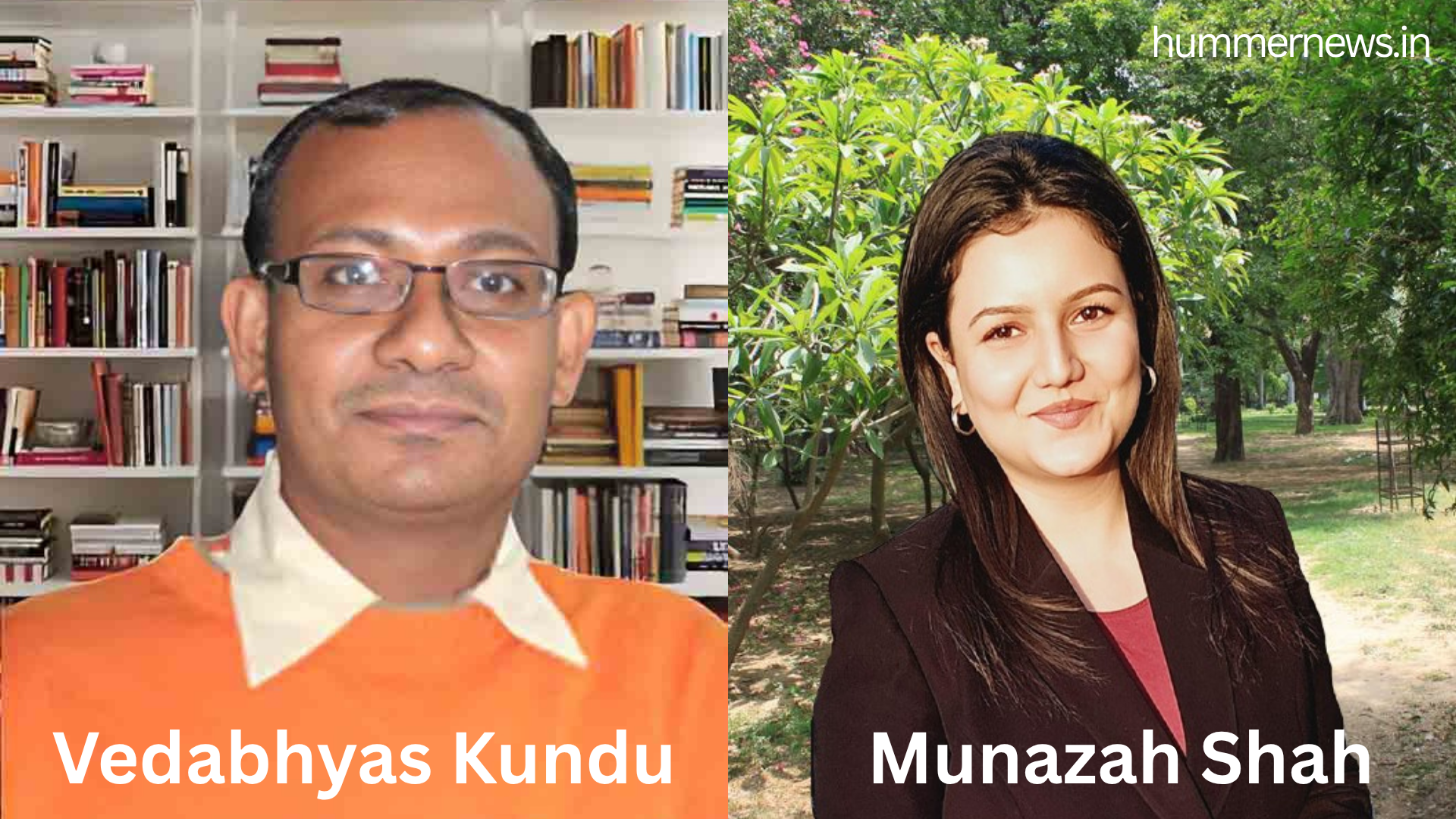
Munazah Shah is a senior broadcast journalist and is working on promotion of human values.
Vedabhyas Kundu is with Gandhi Smriti and Darshan Samiti and is involved in promoting Gandhian ethics and principles