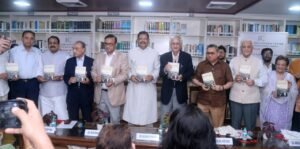
You will be shocked to hear about the scams of Modi government : Digvijay Singh

In 2001, the Ministry of Commerce and Industry launched the National Programme for Organic Production (NPOP), which is implemented by the Agricultural and Processed Food Products Export Development Authority (APEDA). Its objective is to certify and regulate the export of organic products. Under this framework, NPOP accredits Certification Bodies (CBs), which in turn verify Internal Control Systems (ICS). ICS are groups of 25 to 500 farmers who grow organic cotton. As of 2025, there are approximately 6,046 ICSs and 35 CBs.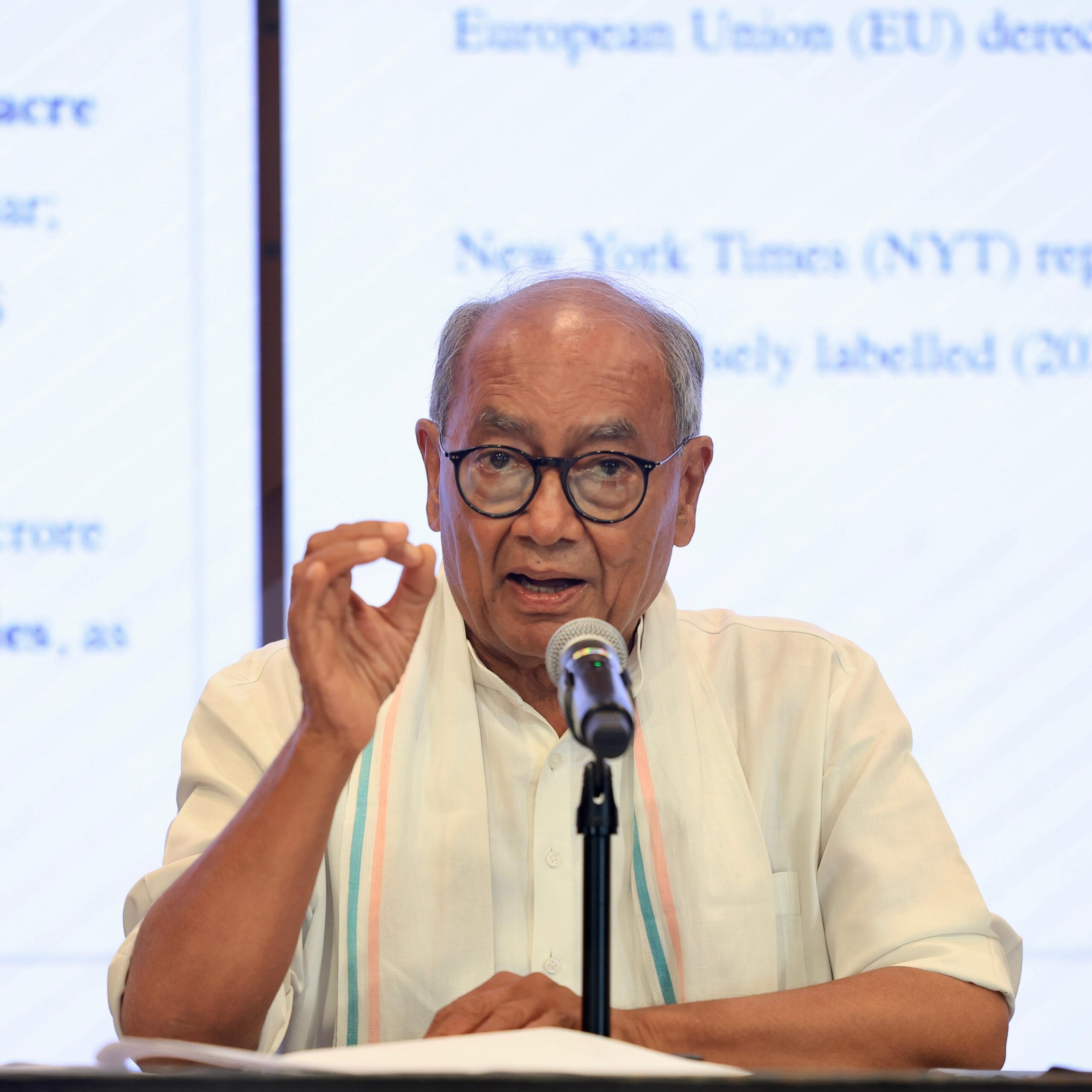
This process operates through an online platform called ‘Tracenet’, which helps in tracking and verifying organic production. After the verification of ICS, a ‘Transaction Certificate’ is issued, which declares the ICS as organic.
But what is the problem?
Most farmers who are shown as registered under ICSs are neither growing organic cotton nor aware of their presence in the system. In short, ICS groups have deliberately committed fraud by adding farmers’ names to obtain Transaction Certificates.
What are the consequences?
While our farmers struggle to get fair prices for their produce, some powerful traders are selling non-organic (Bt) cotton as ‘organic’, earning up to six times the profit.
These exporters are also committing massive tax and GST evasion.
At the international level, India is now being seen as a hub of fraud in the organic market, leading to cancellations of recognition by global agencies.
Scale of the Scam
The size of this scam exceeds ₹2.10 trillion (₹2,10,00,00,00,000), as over the past decade, 1.2 million farmers produced cotton worth ₹1.05 trillion, but commercial entities bought it as non-organic and fraudulently sold it as organic at nearly double the price (depending on season, 2x to 3x).
Each farmer cultivates around 2.5 acres, producing 7 quintals per acre annually, earning approximately ₹87,500/year at ₹5,000/quintal. Out of over 6,000 ICS groups comprising 2.4 million farmers, about 1.2 million have been defrauded and exploited.
Raids on just two commercial entities uncovered ₹750 crore in GST evasion, revealing a ₹7,500 crore scam from just these two, as tax evasion accounted for only 5% of the total fraud amount.
International Concerns
• In October 2020, GOTS (Global Organic Textile Standard) caught fake transaction certificates in India, banned 11 companies, and revoked the accreditation of a major certifier.
• In June 2021, the USDA (USA) ended India’s automatic recognition for organic certification.
• In November 2021, the EU cancelled the recognition of 5 Indian certifiers due to restricted chemicals found in supposedly organic products.
• In January 2022, a New York Times report claimed that 80% of India’s organic cotton exports were fake, and most farmers weren’t even aware their names were used in forged certificates. Many ICSs were created using fake documents and stolen identities.
Government Response
On 27 August 2024, Congress Rajya Sabha MP Shri Digvijaya Singh highlighted the organic cotton fraud in Madhya Pradesh through a letter to the Prime Minister, following which a reply was received from Shri Piyush Goyal on 28 November 2024. The MP also raised a Rajya Sabha question with the Ministry of Commerce and Industry on 20 December 2024. Additionally, a letter was sent on 24 January 2025 demanding an investigation, to which a response was issued on 8 March 2025.
We allege that the Ministry is complicit in this scam, and despite clear violations of its own directives since 2017, it has taken no action. Their letters and continued inaction indicate tacit approval of the scam.
Is the Government Acting?
On paper, yes. In reality, no.
APEDA has issued several advisories since 2017 to mandate Aadhaar-based verification, but even after seven years, these provisions remain unimplemented.
In the letter received from Shri Piyush Goyal dated 28 November 2024, it was acknowledged that fraud had occurred. In response, the registration of one certifying body was cancelled and investigations began against a few others. Subsequently, the matter was raised before the Indore Police Commissioner and Dhar (Madhya Pradesh) District Superintendent of Police.
In the letter received from Shri Piyush Goyal dated 8 March 2025, it was stated that unannounced audits were conducted on cotton producer groups, and an FIR was lodged by the Indore Police Commissioner against a manager of an ICS based in Dhar.
No meaningful action has been taken on complaints made to the ED and EOW.
Indore Crime Branch filed a bogus FIR in an alleged extortion case—not to investigate the crime, but to line their own pockets.
Even after Commerce Minister Piyush Goyal launched Tracenet 2.0 on 9 January 2025, these advisories have still not been implemented.
Our Demands
1. Formation of a Special Investigation Team (SIT) led by the CBI under the supervision of a sitting High Court judge.
2. Immediate implementation of Tracenet 2.0 along with advisories pending since 2017.
3. Criminal action against 192 suspended/terminated fraudulent ICS groups (as all suspensions were revoked within just one month despite being involved in serious violations).
4. Investigation of each of the 6,046 ICS groups, and criminal prosecution of any individual found involved in the scam or fraud.
5. Transparent inspections by certifying bodies.
6. Fair compensation to the exploited farmers.