363 Bishnois Hugged Trees and Were Killed — Because the King Was Hindu. If Aurangzeb Had Ordered This, Devotee DNA Would’ve Quaked!
The Blood-Stained Sacrifice of the Environment-Loving Bishnoi Community
Reyasat Ali Sameer
(Senior Journalist)
When “Rajdharma” Drew Blood — and the Devotees Fell Silent
Year 1730 CE, Khejarli village, Rajasthan.
On the sands of the desert, in defense of greenery, 363 Hindu Bishnois gave their lives. And whose command was it?
Not of some ‘Ghazni’ or ‘Ghauri’,
But of Maharaja Abhay Singh of Jodhpur —
A “Sanatani ruler,” a “protector of Dharma.”
Yes, the same king whose name is still hailed —
Because his crown was sacred, and his religion was “ours.”
When Saving Trees Meant a Death Sentence
The king’s palace needed construction, and Khejri trees were to be felled.
Royal decree: no one must oppose.
But the Bishnoi community, worshippers of nature since 1485, refused to bow.
Amrita Devi Bishnoi raised a slogan:
> “Even if life is lost, let the tree be saved — such is a cheap bargain.”

And then…
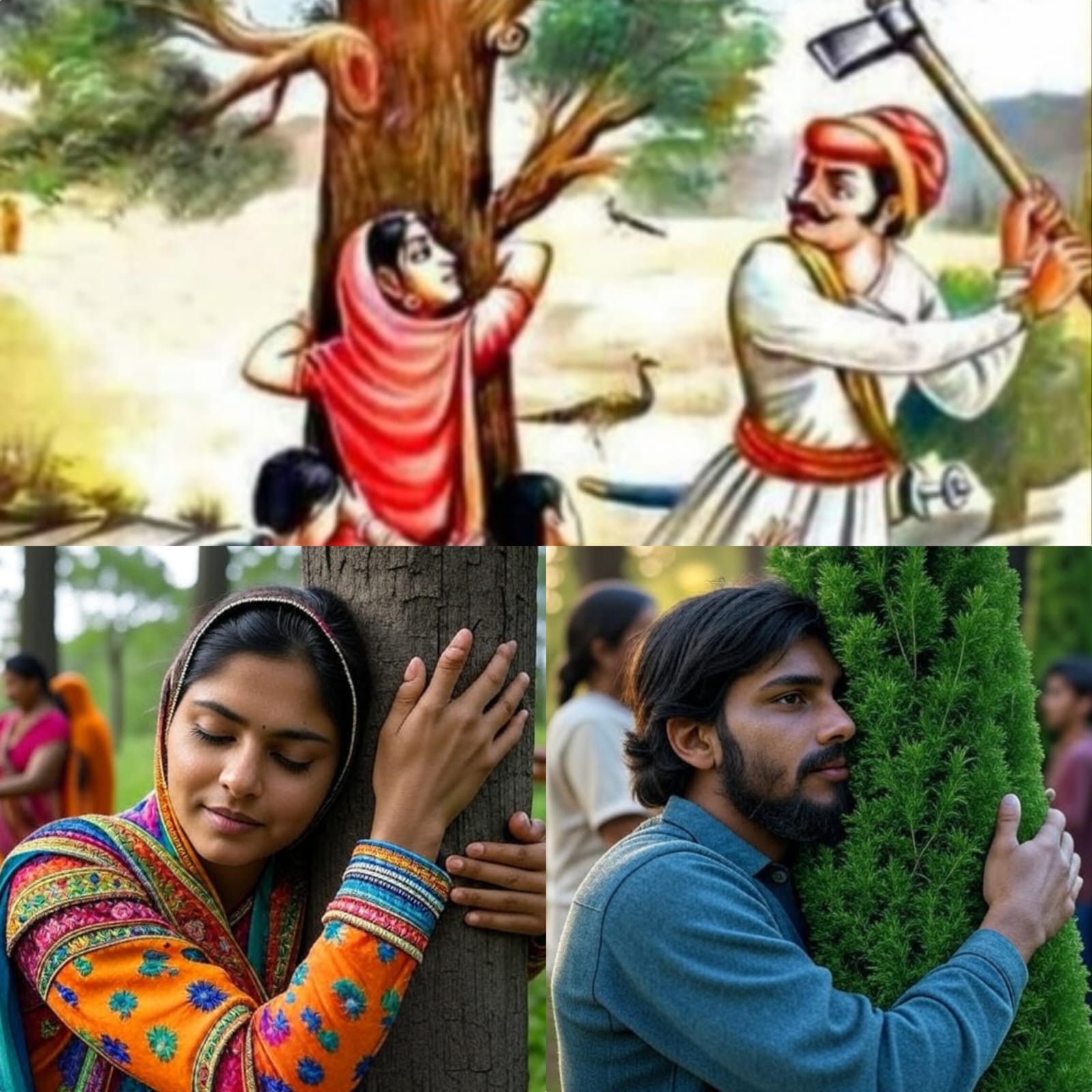
Amrita Devi and her three daughters — Asu, Ratni, and Bhagu — hugged the trees and embraced death.
Then 363 people offered their necks, but did not let the trees fall.
Here’s the evidence in the court of history:
1. “People’s Movement for Environmental Justice” – Vandana Shiva
2. “Religion and Ecology in India and Southeast Asia” – David Haberman
3. Government of Rajasthan: Khejarli Martyr Memorial Documents
4. The Hindu (11 Sept 2022): “The first Chipko: Bishnoi martyrs remembered”
5. Wikipedia (hi/en): Khejarli Massacre
Was This Not a ‘Hindu Massacre’?
A direct question to hateful blind devotees:
> Were the Bishnois not Hindu?
Is the murder of 363 Hindus forgiven under “religious Rajdharma”?
Had this act been done by a Muslim ruler, then today:
– It would’ve been labeled as “Tree Jihad”
– Roads would’ve been renamed
– TV anchors would run 9 PM shows on the “Hari Vriksha Massacre”
– Signboards would be defaced
– The descendants of Mughals would’ve been forced to write blood-signed apologies
> Had a Muslim ruler ordered the killing of 363 Hindu Bishnois at Khejarli —
by now a hundred films would’ve been made,
textbooks would teach “Green Terror,”
roads and squares would be renamed,
and devotees would scare their kids not with demons, but “Tree Jihad.”
> If that Muslim ruler had a tomb somewhere,
devotee mobs would’ve demolished it,
and videos of blackening signboards would go viral.
But since the order came from a Hindu king,
the devotees’ conscience was set free,
and the martyrs’ memory confined to inboxes.
Today’s Shamelessness:
Even today, government records in Rajasthan
call “Maharaja Abhay Singh a great and valiant ruler.”
Roads, squares, institutions are named after him.
While Amrita Devi’s name…
only exists in a forest conservation award.
> Blood turned into pilgrimage when the crown was Hindu,
and sacrifice became “love for nature” — not martyrdom!
A few bitter questions to the hateful devotees:
1. Had a ‘Muslim ruler’ killed those who tried to save trees, wouldn’t grand temples be erected by now — because the goal would be spreading hate, not faith?
2. Does royal cruelty become sacred when wrapped in religion?
3. Is history only remembered when the killer is Muslim?
The sacrifice of 363 Hindu Bishnois still breathes in the air,
but the corpses of political devotion fail to feel it.
> “When the sword belongs to a Sanatani king and faith blinds the eyes —
then even blood is crowned as ‘protector of Dharma’.”
In the end…
> In this country, oppression is called ‘sin’
only when the killer wears a cap.
But if the crown is Hindu, and so is the sword —
even 363 corpses are dubbed ‘tradition’.
> Sometimes, silence is more dangerous than tyranny —
when it decides whose death deserves mourning, based on religion.
Tribute to those 363 immortal souls,
who chose to become trees themselves in order to protect the trees.